
Landscaping & Hardscaping in McFarland, WI
On Lake Waubesa, where the water table is the thing you plan around.
Landscaping & Hardscaping in McFarland, WI
Ridge-top and hillside properties on ground that drains almost too well.

Dane County yards aren’t flat. A slope from the driveway to the front door, a drop from the patio to the lawn, a hillside garden you can’t get to safely, all of it needs steps that stay level and don’t shift when the ground freezes and thaws. We build them into the site properly the first time, not set on top of it.
McFarland sits on Lake Waubesa with the Yahara River running through the chain, and the village sits lower than most of Dane County. That matters more than it sounds. On low ground near a lake, groundwater is close to the surface, and drainage that would work anywhere else stops working here, because the standard approach assumes there is somewhere lower for water to go.


Ground Conditions
What McFarland Yards Are Actually Dealing With
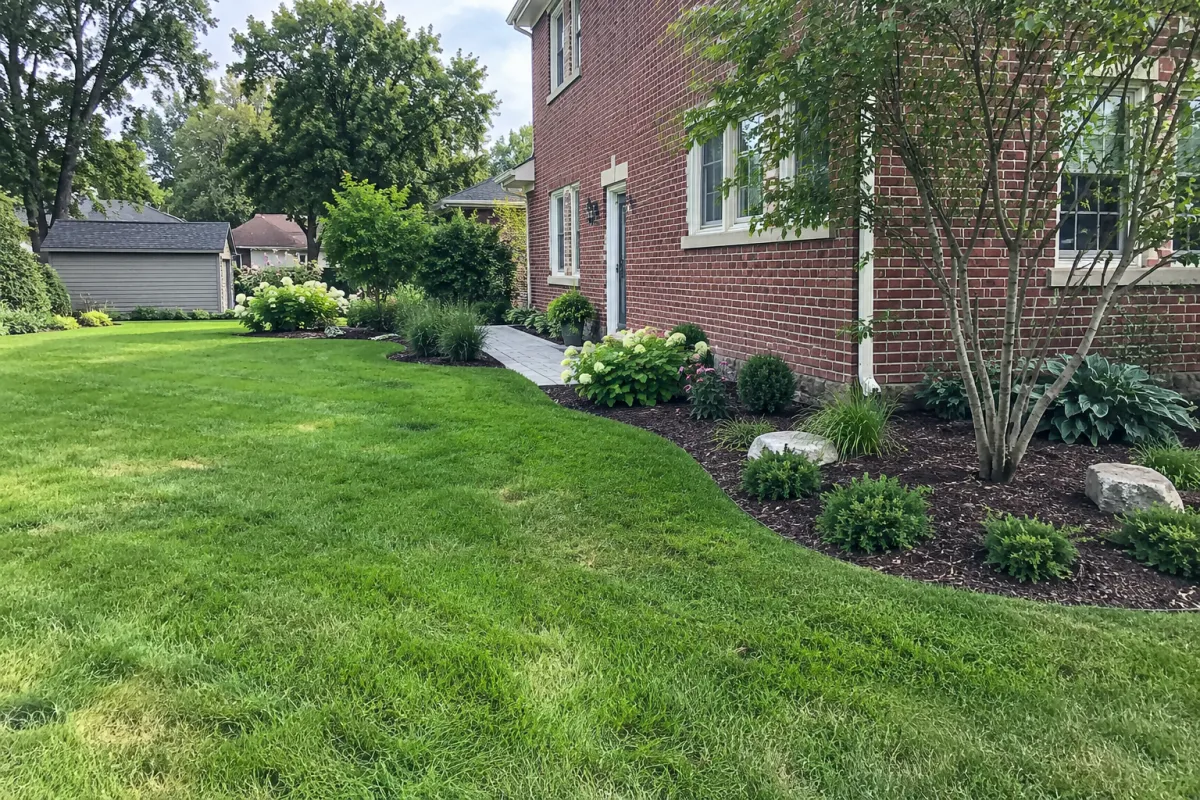
A high water table. Close to the lake and the wetlands, groundwater sits near the surface for much of the year. Ground can be saturated from below while the surface looks dry.
Spring-fed ground. The wetland complex southwest of the lake is fed by springs that run continuously. Spring-fed ground stays wet in a dry August, which is why some wet spots here have nothing to do with rainfall.
Organic soils in the low areas. The peat in the Waubesa wetlands runs deep — measured in the tens of feet in places. Properties near that ground can have organic soil in the profile, and organic soil compresses under load in a way mineral soil does not.
Post-Beltline subdivisions. Residential growth here accelerated after the Beltline work at the end of the 1980s, so a lot of the housing sits on lots that were graded and filled to make them buildable.
What We Get Called For Most in McFarland
Yard grading & drainage. The defining service in this village, and the one most often done wrong here.
Landscaping and planting. Plant selection matters more where the water table moves through the season. Plenty of good plants will not tolerate wet feet in spring.
Hardscaping. Patios and walkways on soft ground need the base built correctly, because anything set on ground that compresses will move.
Retaining walls. Walls hold back saturated soil here, which means the drainage behind them is doing more work than usual.
Lawn care and snow removal. Regular residential work through the village and along the lake.

McFarland sits on Lake Waubesa with the Yahara River running through the chain, and the village sits lower than most of Dane County. That matters more than it sounds. On low ground near a lake, groundwater is close to the surface, and drainage that would work anywhere else stops working here, because the standard approach assumes there is somewhere lower for water to go.
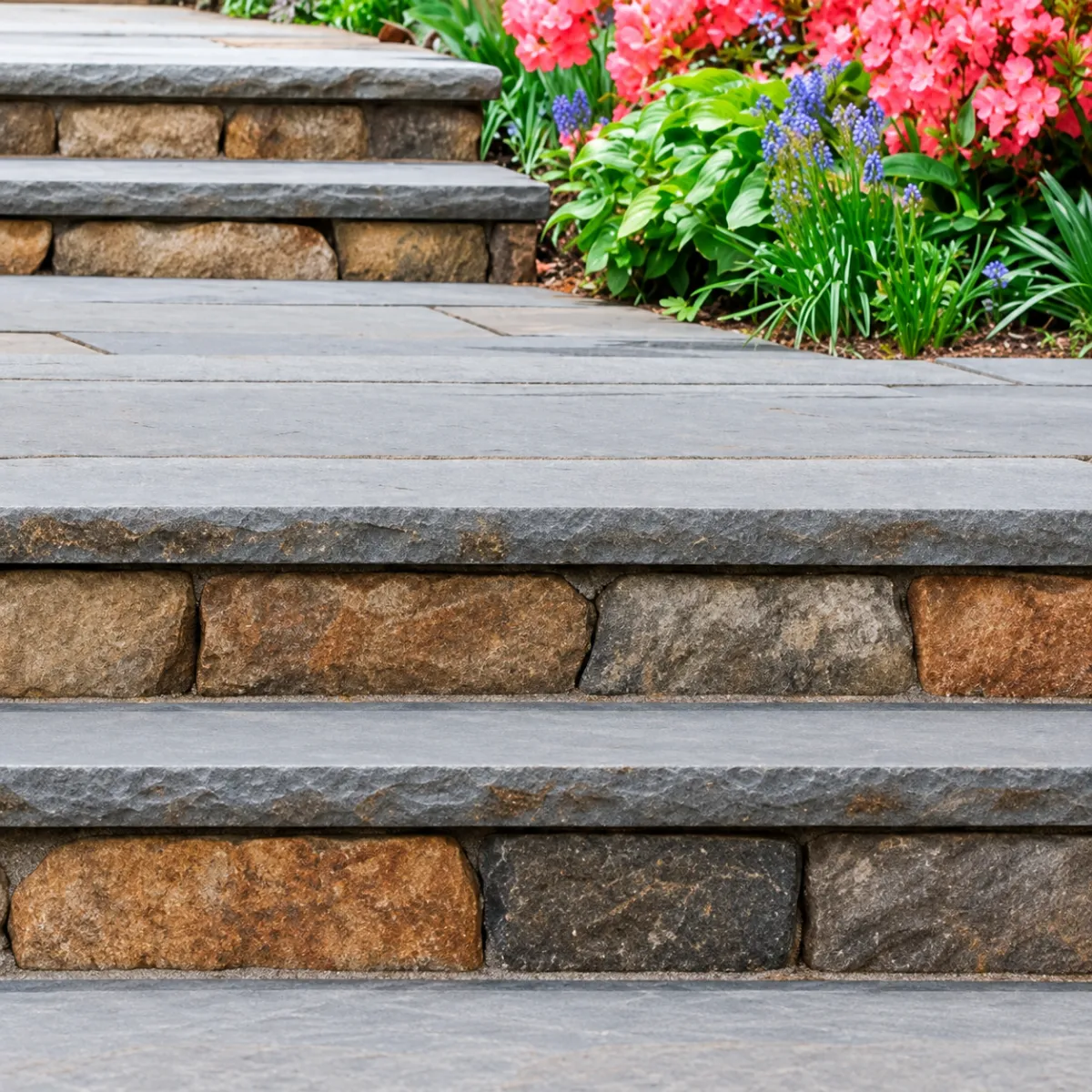
Dane County yards aren’t flat. A slope from the driveway to the front door, a drop from the patio to the lawn, a hillside garden you can’t get to safely, all of it needs steps that stay level and don’t shift when the ground freezes and thaws. We build them into the site properly the first time, not set on top of it.
Ground Conditions
What McFarland Yards Are Actually Dealing With
A high water table. Close to the lake and the wetlands, groundwater sits near the surface for much of the year. Ground can be saturated from below while the surface looks dry.
Spring-fed ground. The wetland complex southwest of the lake is fed by springs that run continuously. Spring-fed ground stays wet in a dry August, which is why some wet spots here have nothing to do with rainfall.
Organic soils in the low areas. The peat in the Waubesa wetlands runs deep — measured in the tens of feet in places. Properties near that ground can have organic soil in the profile, and organic soil compresses under load in a way mineral soil does not.
Post-Beltline subdivisions. Residential growth here accelerated after the Beltline work at the end of the 1980s, so a lot of the housing sits on lots that were graded and filled to make them buildable.
What We Get Called For Most in McFarland
Yard grading & drainage. The defining service in this village, and the one most often done wrong here.
Landscaping and planting. Plant selection matters more where the water table moves through the season. Plenty of good plants will not tolerate wet feet in spring.
Hardscaping. Patios and walkways on soft ground need the base built correctly, because anything set on ground that compresses will move.
Retaining walls. Walls hold back saturated soil here, which means the drainage behind them is doing more work than usual.
Lawn care and snow removal. Regular residential work through the village and along the lake.
Ground Conditions
What McFarland Yards Are Actually Dealing With
A high water table. Close to the lake and the wetlands, groundwater sits near the surface for much of the year. Ground can be saturated from below while the surface looks dry.
Spring-fed ground. The wetland complex southwest of the lake is fed by springs that run continuously. Spring-fed ground stays wet in a dry August, which is why some wet spots here have nothing to do with rainfall.
Organic soils in the low areas. The peat in the Waubesa wetlands runs deep — measured in the tens of feet in places. Properties near that ground can have organic soil in the profile, and organic soil compresses under load in a way mineral soil does not.
Post-Beltline subdivisions. Residential growth here accelerated after the Beltline work at the end of the 1980s, so a lot of the housing sits on lots that were graded and filled to make them buildable.
What We Get Called For Most in McFarland
Yard grading & drainage. The defining service in this village, and the one most often done wrong here.
Landscaping and planting. Plant selection matters more where the water table moves through the season. Plenty of good plants will not tolerate wet feet in spring.
Hardscaping. Patios and walkways on soft ground need the base built correctly, because anything set on ground that compresses will move.
Retaining walls. Walls hold back saturated soil here, which means the drainage behind them is doing more work than usual.
Lawn care and snow removal. Regular residential work through the village and along the lake.
Top Services for McFarland
What We Get Called For Most in McFarland
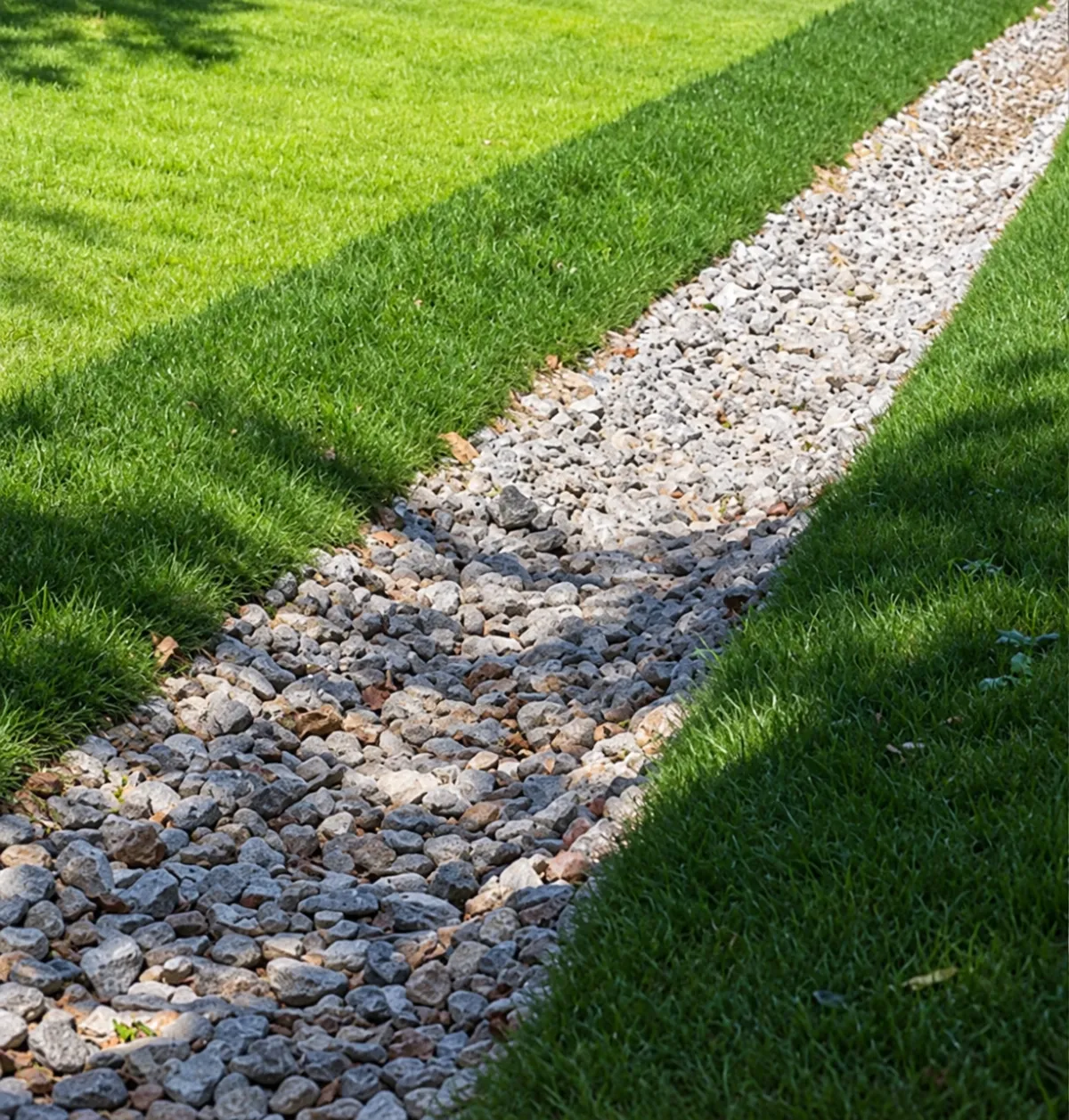
French drain installation & yard drainage
Installing underground pipes to redirect water away from problem areas.
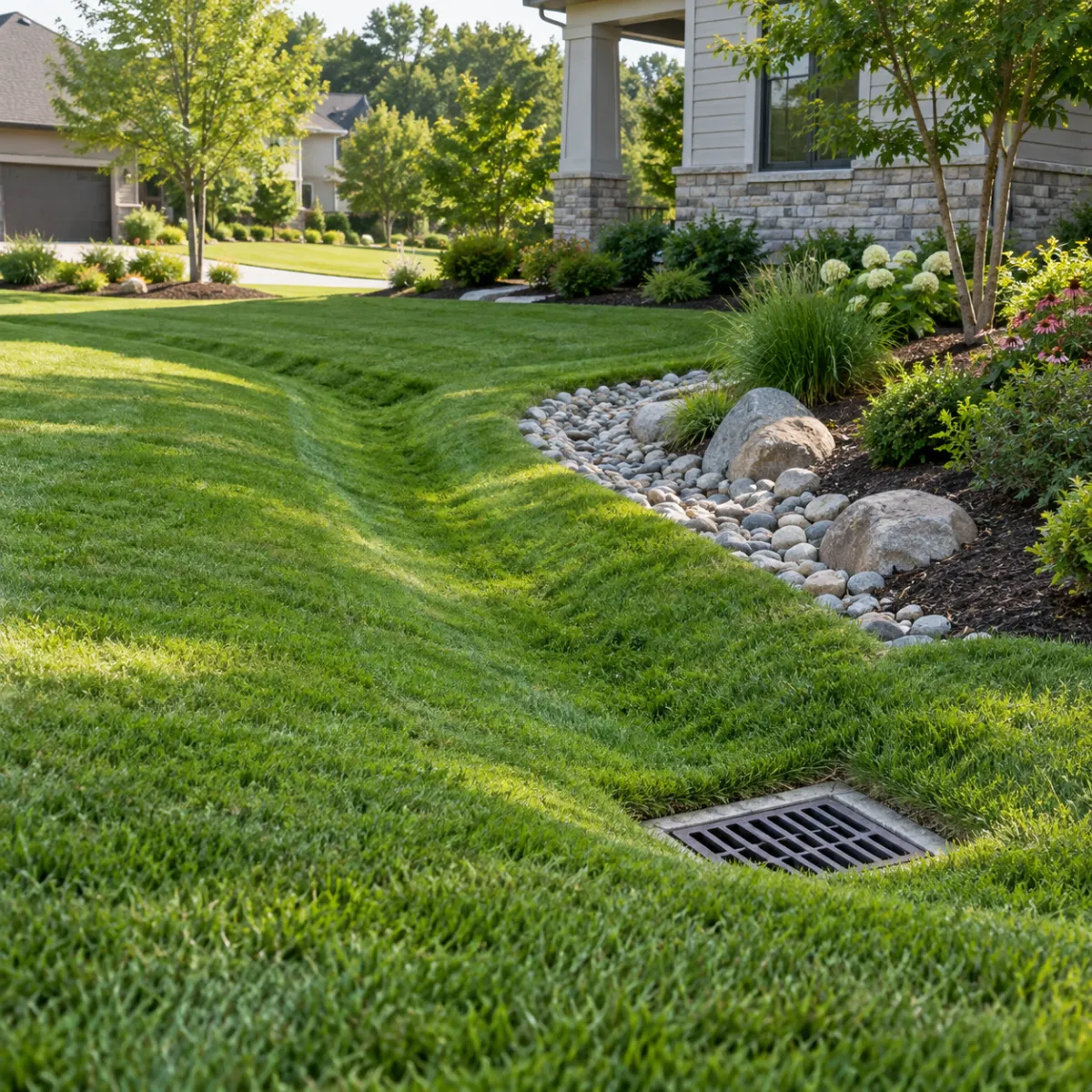
Surface water management
Controlling how water flows across the yard's surface.
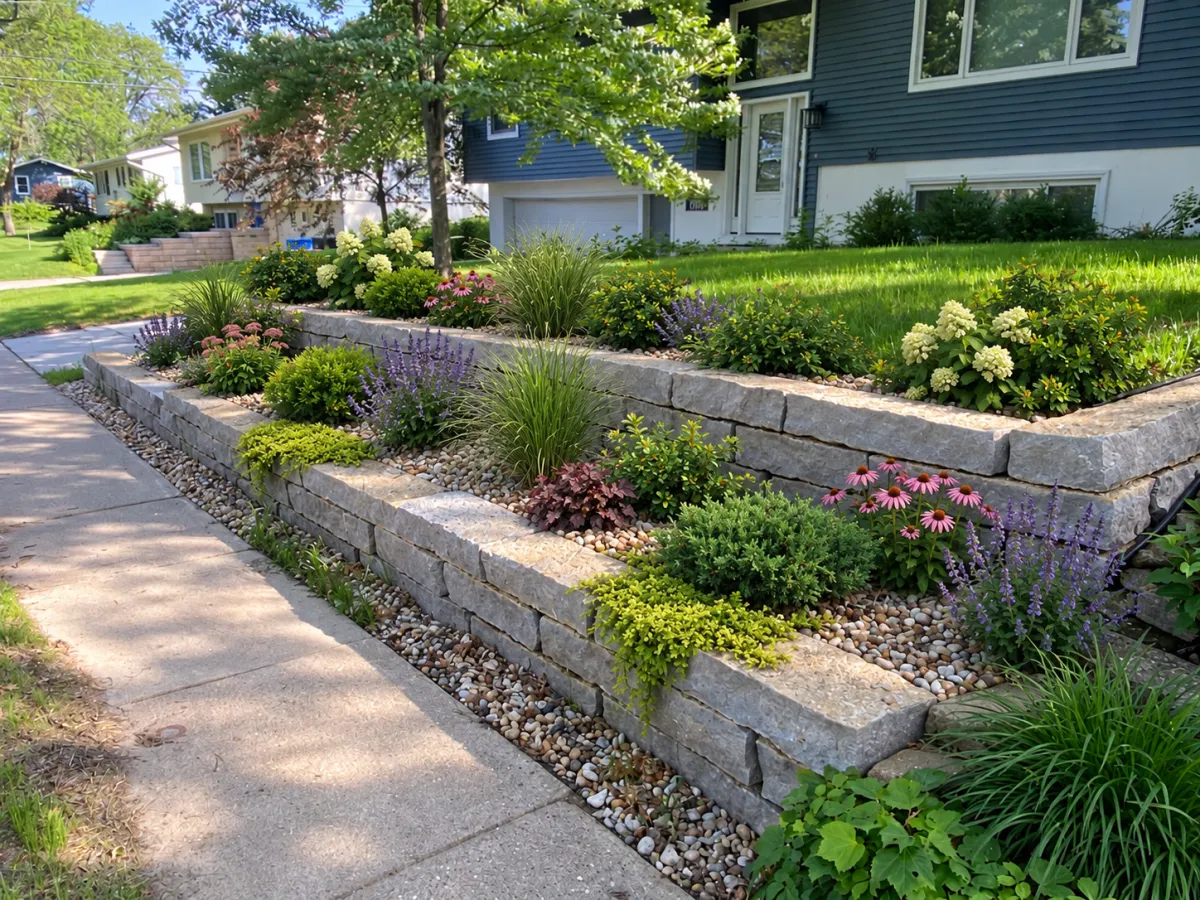
Planting plan design
Designing what plants go where.
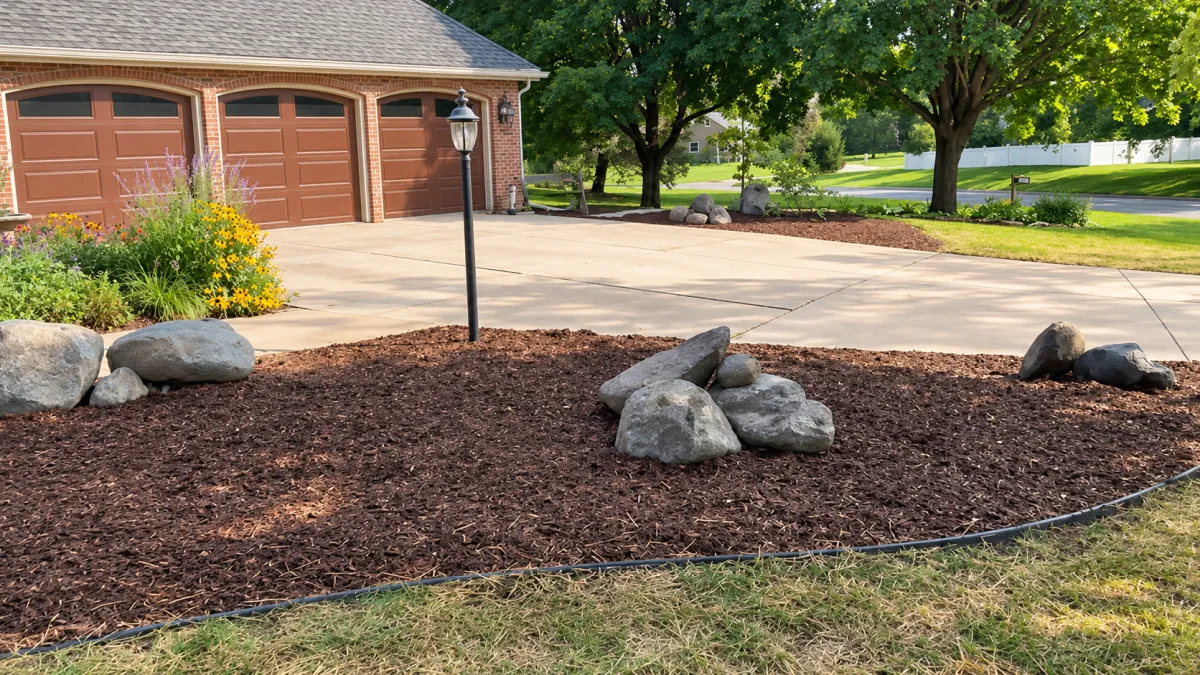
Garden retaining walls
Smaller retaining walls used in garden/landscaping areas.
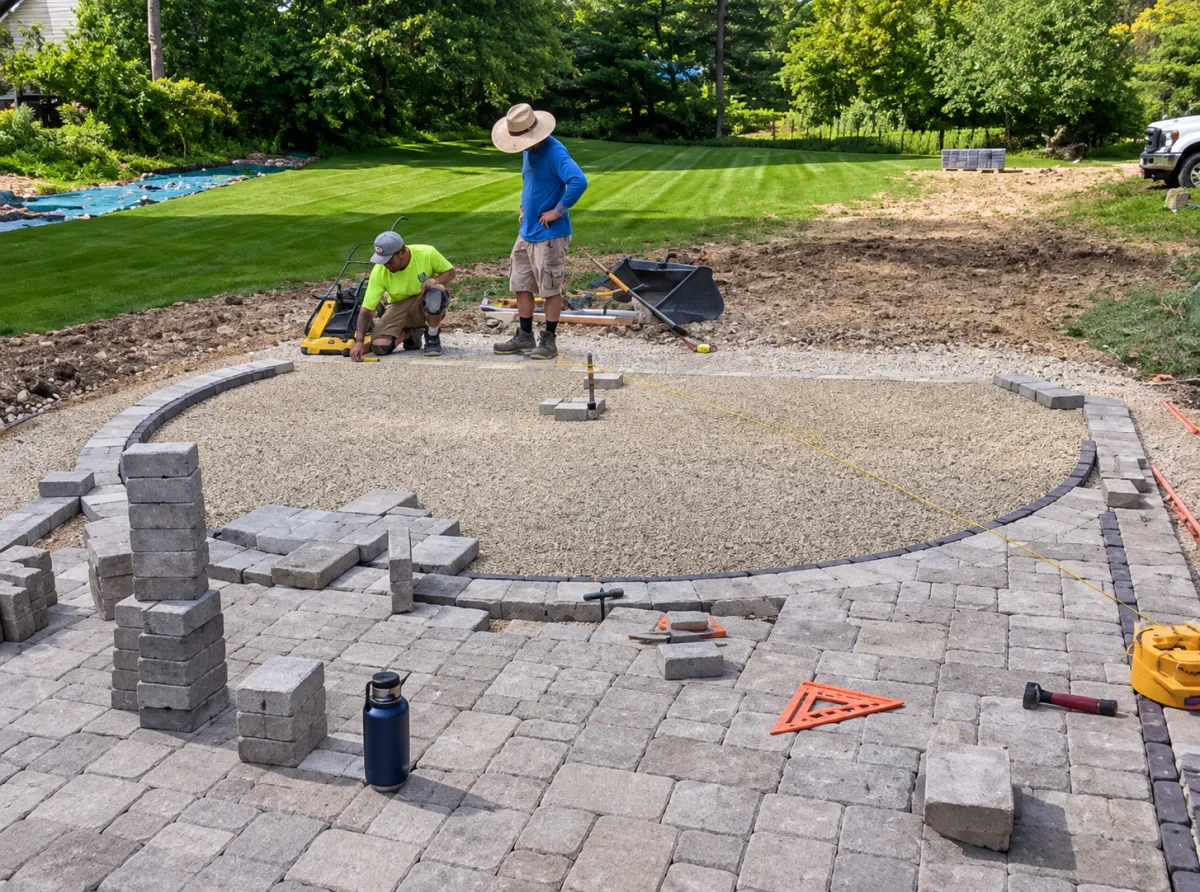
Paver Patio & Patio Installation
Building a patio using individual pavers (stone/concrete blocks).
Why a Drain Sometimes Does Nothing in McFarland
Someone has a wet yard. They pay for a French drain. A year later the yard is still wet, and they assume the drain was installed badly.
Often it was installed fine. A drain works by collecting water and giving it somewhere lower to run. On ground where the water table is already near the surface, there is no lower. The trench fills from below rather than draining from above, and the pipe sits in groundwater doing nothing. This is the single most common drainage mistake we see around the lake, and it is usually made by people who install drains correctly everywhere else.
The second version of the same problem is a spring. If water is coming up rather than sitting on top, no amount of surface work will stop it, because there is no storm to wait out. It runs in August the same as in April
How we build: On high-water-table ground the answer is lateral, not downward: move water along the surface or just under it toward an outlet that is genuinely lower, which often means somewhere off the property. Where there is no outlet, the usable ground gets built up rather than dug down. That means raised beds and a built-up grade for the areas that need to stay dry, and plants chosen for wet feet everywhere else. That means the first step is establishing where the water table actually sits, before anyone quotes a trench.
Why a Drain Sometimes Does Nothing in McFarland
Someone has a wet yard. They pay for a French drain. A year later the yard is still wet, and they assume the drain was installed badly.
Often it was installed fine. A drain works by collecting water and giving it somewhere lower to run. On ground where the water table is already near the surface, there is no lower. The trench fills from below rather than draining from above, and the pipe sits in groundwater doing nothing. This is the single most common drainage mistake we see around the lake, and it is usually made by people who install drains correctly everywhere else.
The second version of the same problem is a spring. If water is coming up rather than sitting on top, no amount of surface work will stop it, because there is no storm to wait out. It runs in August the same as in April
How we build: On high-water-table ground the answer is lateral, not downward: move water along the surface or just under it toward an outlet that is genuinely lower, which often means somewhere off the property. Where there is no outlet, the usable ground gets built up rather than dug down. That means raised beds and a built-up grade for the areas that need to stay dry, and plants chosen for wet feet everywhere else. That means the first step is establishing where the water table actually sits, before anyone quotes a trench.
Why a Drain Sometimes Does Nothing in McFarland
Someone has a wet yard. They pay for a French drain. A year later the yard is still wet, and they assume the drain was installed badly.
Often it was installed fine. A drain works by collecting water and giving it somewhere lower to run. On ground where the water table is already near the surface, there is no lower. The trench fills from below rather than draining from above, and the pipe sits in groundwater doing nothing. This is the single most common drainage mistake we see around the lake, and it is usually made by people who install drains correctly everywhere else.
The second version of the same problem is a spring. If water is coming up rather than sitting on top, no amount of surface work will stop it, because there is no storm to wait out. It runs in August the same as in April
How we build: On high-water-table ground the answer is lateral, not downward: move water along the surface or just under it toward an outlet that is genuinely lower, which often means somewhere off the property. Where there is no outlet, the usable ground gets built up rather than dug down. That means raised beds and a built-up grade for the areas that need to stay dry, and plants chosen for wet feet everywhere else. That means the first step is establishing where the water table actually sits, before anyone quotes a trench.
We Will Find Out Where the Water Is Coming From
Before quoting drainage work in McFarland, Matt walks the property and works out whether you are dealing with surface water, groundwater, or a spring. Those need different fixes. Call Madison Green Team at (608) 573-8889 or request a free quote online.
HOW WE BRING YOUR OUTDOOR
VISION TO LIFE
Get in Touch
Call 608-573-8889 or use our contact form to tell us about your project.
Plan & Design
We assess your property, discuss your needs, and provide a detailed design or service plan.
Build & Maintain
Our team completes installation or maintenance, keeping your landscape beautiful and functional.
Our Dane County Landscaping Service Areas
Based in Verona, we serve Madison, Middleton, Sun Prairie, Fitchburg, Waunakee, Mount Horeb, Cross Plains, and more.
Not sure if we cover your area?
Give us a call - we likely do.
Contact Us
Monday-Saturday: 7:00AM - 6:00PM
Closed Sunday


