
Landscaping & Hardscaping in Cross Plains, WI
Valley-side properties where water moves fast and takes soil with it.
Landscaping & Hardscaping in Cross Plains, WI
Valley-side properties where water moves fast and takes soil with it.

Dane County yards aren’t flat. A slope from the driveway to the front door, a drop from the patio to the lawn, a hillside garden you can’t get to safely, all of it needs steps that stay level and don’t shift when the ground freezes and thaws. We build them into the site properly the first time, not set on top of it.
Cross Plains sits where the glaciated part of Dane County meets the driftless. That's a real line, not a figure of speech, and it's why yards here behave differently than yards fifteen minutes east. Ground is steeper, soil is thinner over rock, and water heads downhill toward Black Earth Creek instead of sitting where it lands. The problems that brings aren't the problems a Sun Prairie yard has.


Ground Conditions
What Cross Plains Properties Are Dealing With
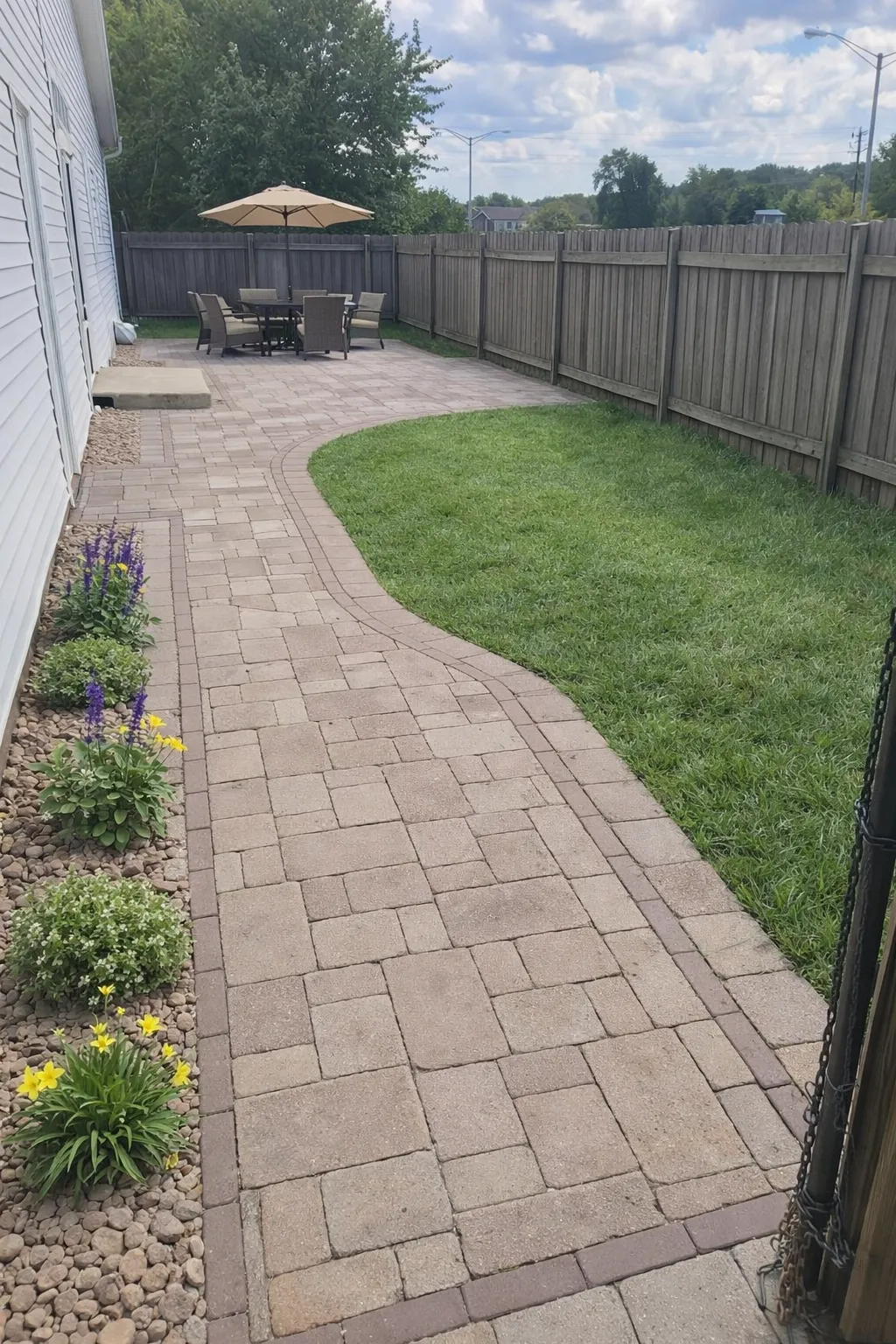
Slope. Valley-side lots mean grade changes on most properties, and grade changes mean walls, terracing, or steps if you want usable flat ground.
Fast-draining soil on thin ground. Driftless soils are well drained and shallow over rock. Water leaves quickly and takes loose soil with it.
Runoff, not standing water. The Madison problem is water that sits. The Cross Plains problem is water with somewhere to go and a route it picked itself.
Creek proximity. Properties near the Black Earth Creek corridor deserve a closer look at where runoff ends up before anything gets regraded.
What We Get Called For Most in Cross Plains
Retaining walls and boulder retaining wall installation. Boulder walls suit this terrain and this rock.
Erosion control solutions. Bare slope losing soil every spring.
Yard grading & drainage. Slowing water down and choosing where it goes.
Outdoor step construction. Getting from one level of a sloped lot to another without a scramble.
Snow removal. Sloped driveways are a different job than flat ones.

Cross Plains sits where the glaciated part of Dane County meets the driftless. That's a real line, not a figure of speech, and it's why yards here behave differently than yards fifteen minutes east. Ground is steeper, soil is thinner over rock, and water heads downhill toward Black Earth Creek instead of sitting where it lands. The problems that brings aren't the problems a Sun Prairie yard has.
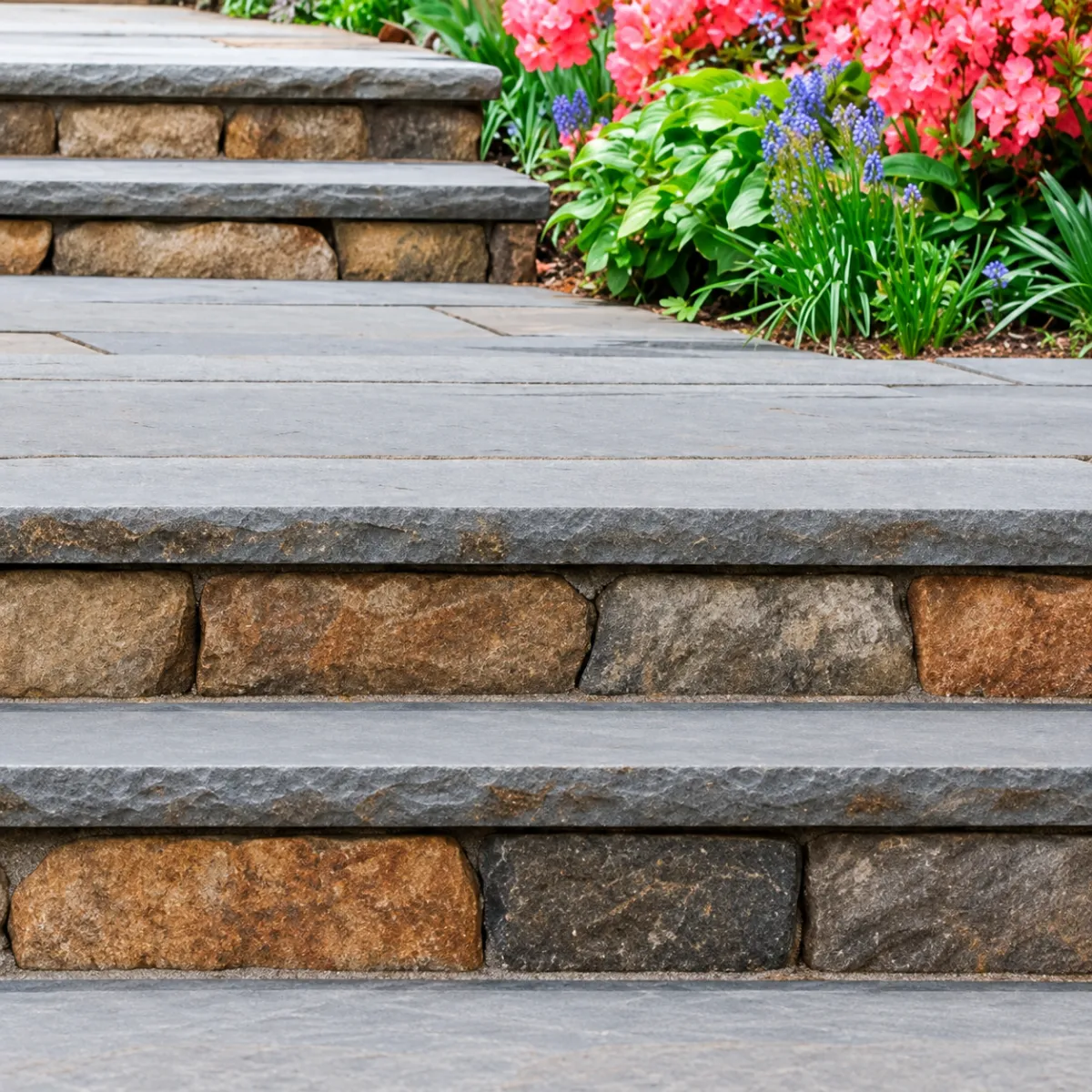
Dane County yards aren’t flat. A slope from the driveway to the front door, a drop from the patio to the lawn, a hillside garden you can’t get to safely, all of it needs steps that stay level and don’t shift when the ground freezes and thaws. We build them into the site properly the first time, not set on top of it.
Ground Conditions
What Cross Plains Properties Are Dealing With
Slope. Valley-side lots mean grade changes on most properties, and grade changes mean walls, terracing, or steps if you want usable flat ground.
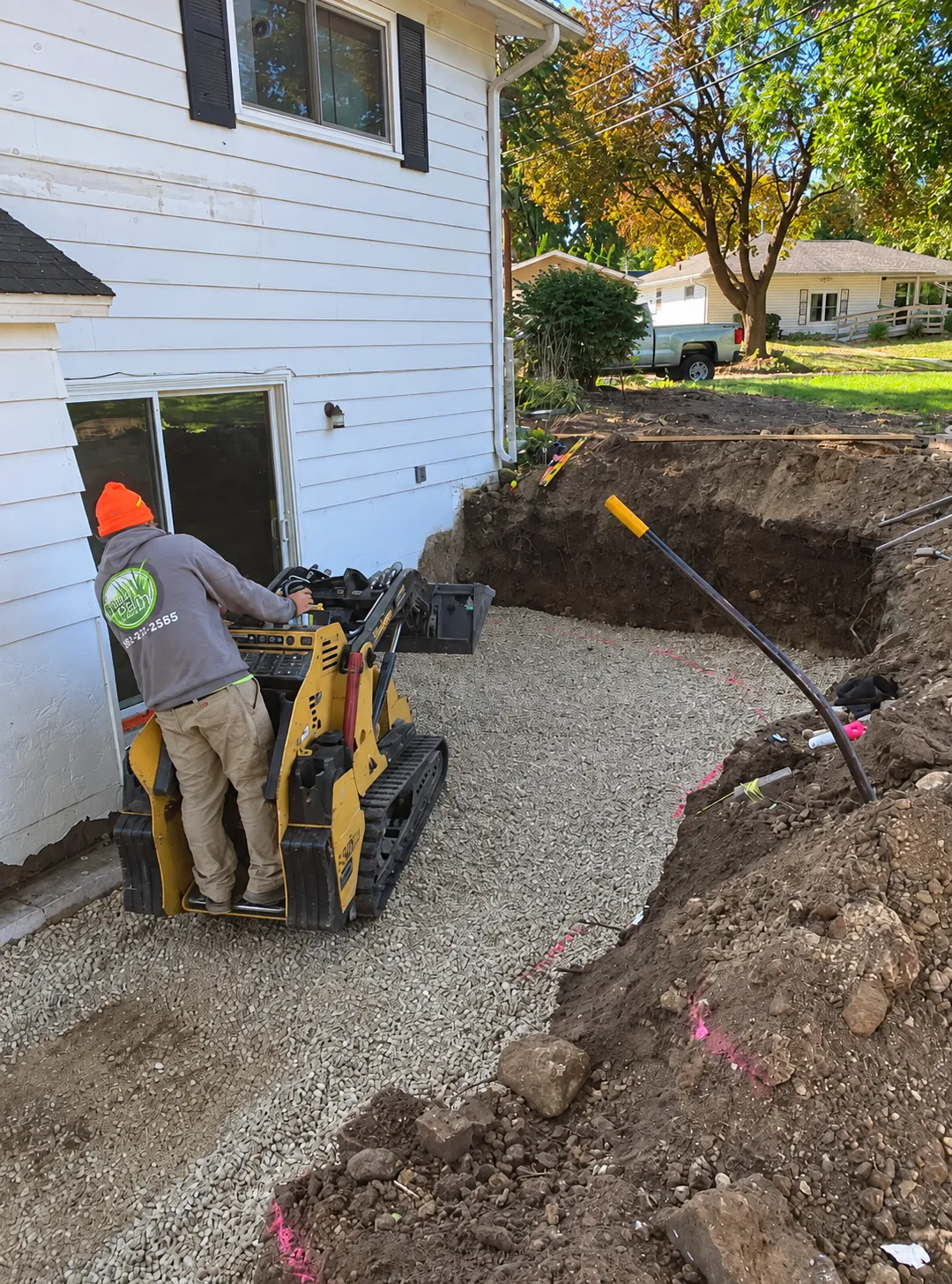
Fast-draining soil on thin ground. Driftless soils are well drained and shallow over rock. Water leaves quickly and takes loose soil with it.
Runoff, not standing water. The Madison problem is water that sits. The Cross Plains problem is water with somewhere to go and a route it picked itself.
Creek proximity. Properties near the Black Earth Creek corridor deserve a closer look at where runoff ends up before anything gets regraded.
What We Get Called For Most in Cross Plains
Retaining walls and boulder retaining wall installation. Boulder walls suit this terrain and this rock.
Erosion control solutions. Bare slope losing soil every spring.
Yard grading & drainage. Slowing water down and choosing where it goes.
Outdoor step construction. Getting from one level of a sloped lot to another without a scramble.
Snow removal. Sloped driveways are a different job than flat ones.
Ground Conditions
What Cross Plains Properties Are Dealing With
Slope. Valley-side lots mean grade changes on most properties, and grade changes mean walls, terracing, or steps if you want usable flat ground.
Fast-draining soil on thin ground. Driftless soils are well drained and shallow over rock. Water leaves quickly and takes loose soil with it.
Runoff, not standing water. The Madison problem is water that sits. The Cross Plains problem is water with somewhere to go and a route it picked itself.
Creek proximity. Properties near the Black Earth Creek corridor deserve a closer look at where runoff ends up before anything gets regraded.
What We Get Called For Most in Cross Plains
Retaining walls and boulder retaining wall installation. Boulder walls suit this terrain and this rock.
Erosion control solutions. Bare slope losing soil every spring.
Yard grading & drainage. Slowing water down and choosing where it goes.
Outdoor step construction. Getting from one level of a sloped lot to another without a scramble.
Snow removal. Sloped driveways are a different job than flat ones.
Services, Ranked for Cross Plains
What We Get Called For Most in Cross Plains
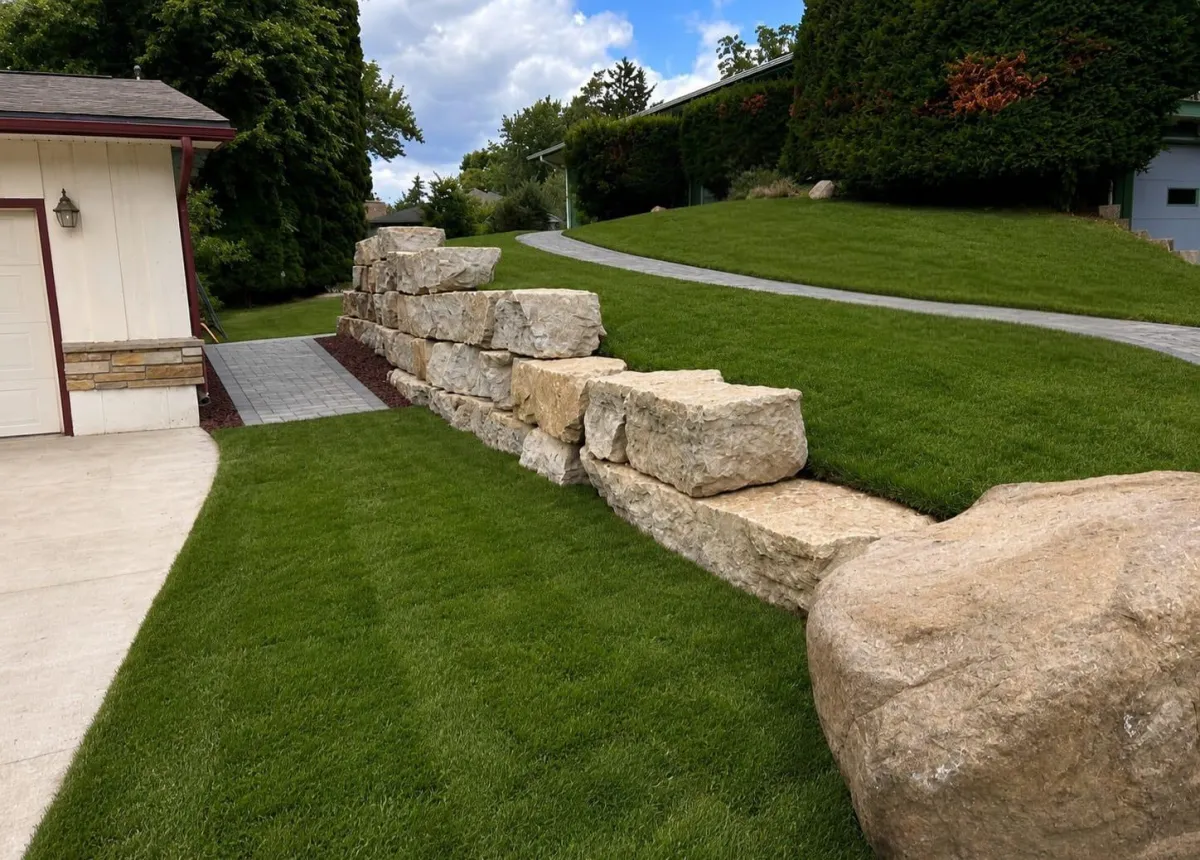
Retaining walls
Building or repairing walls that hold back soil on sloped yards.
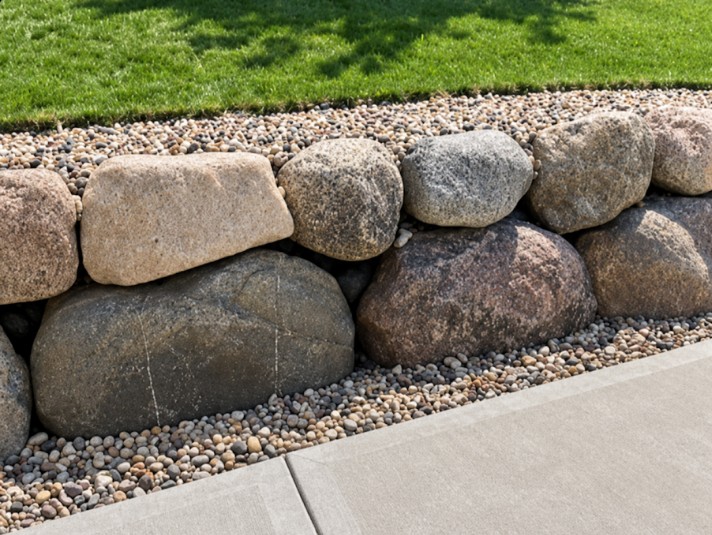
Boulder retaining wall installation
Building retaining walls out of large boulders.
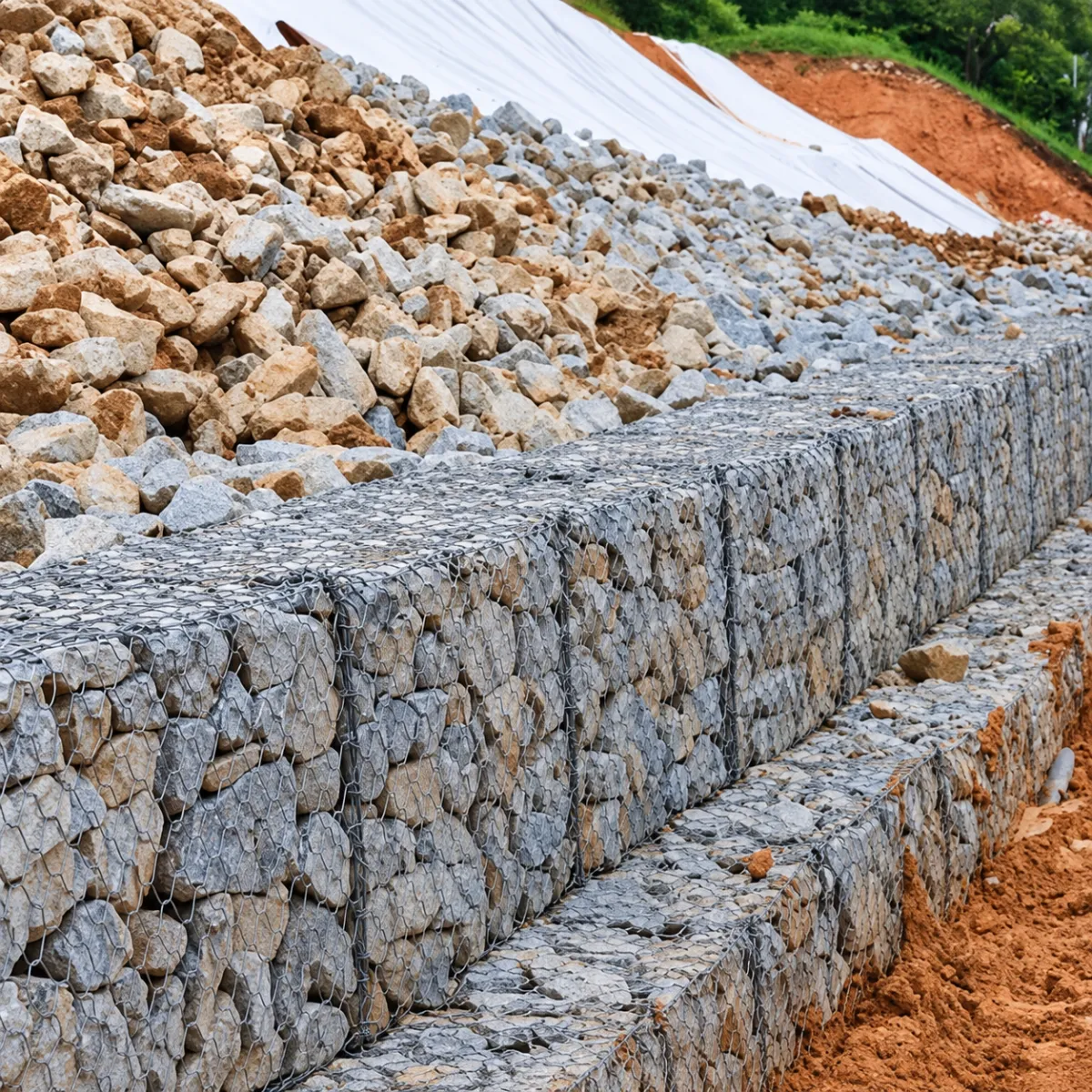
Erosion control solutions
Preventing soil from washing away.
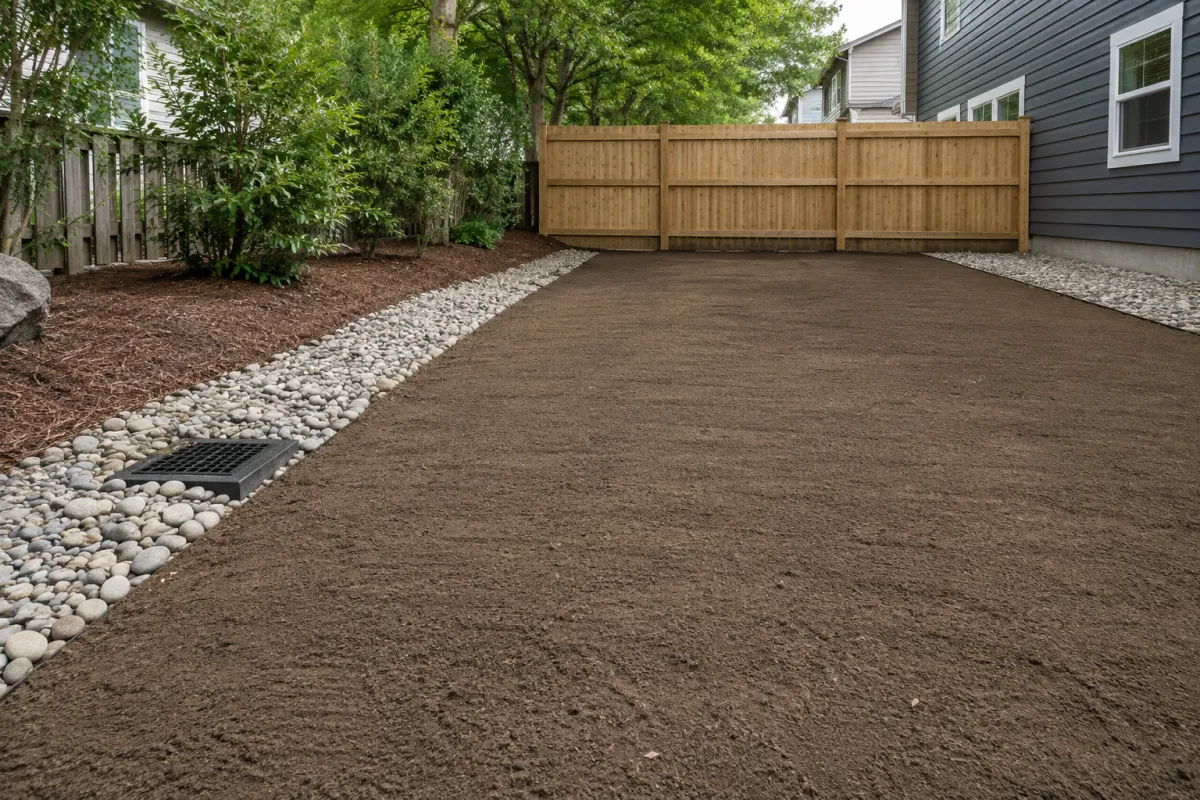
Yard grading & drainage
Managing water flow in a yard to prevent pooling, flooding, or erosion.
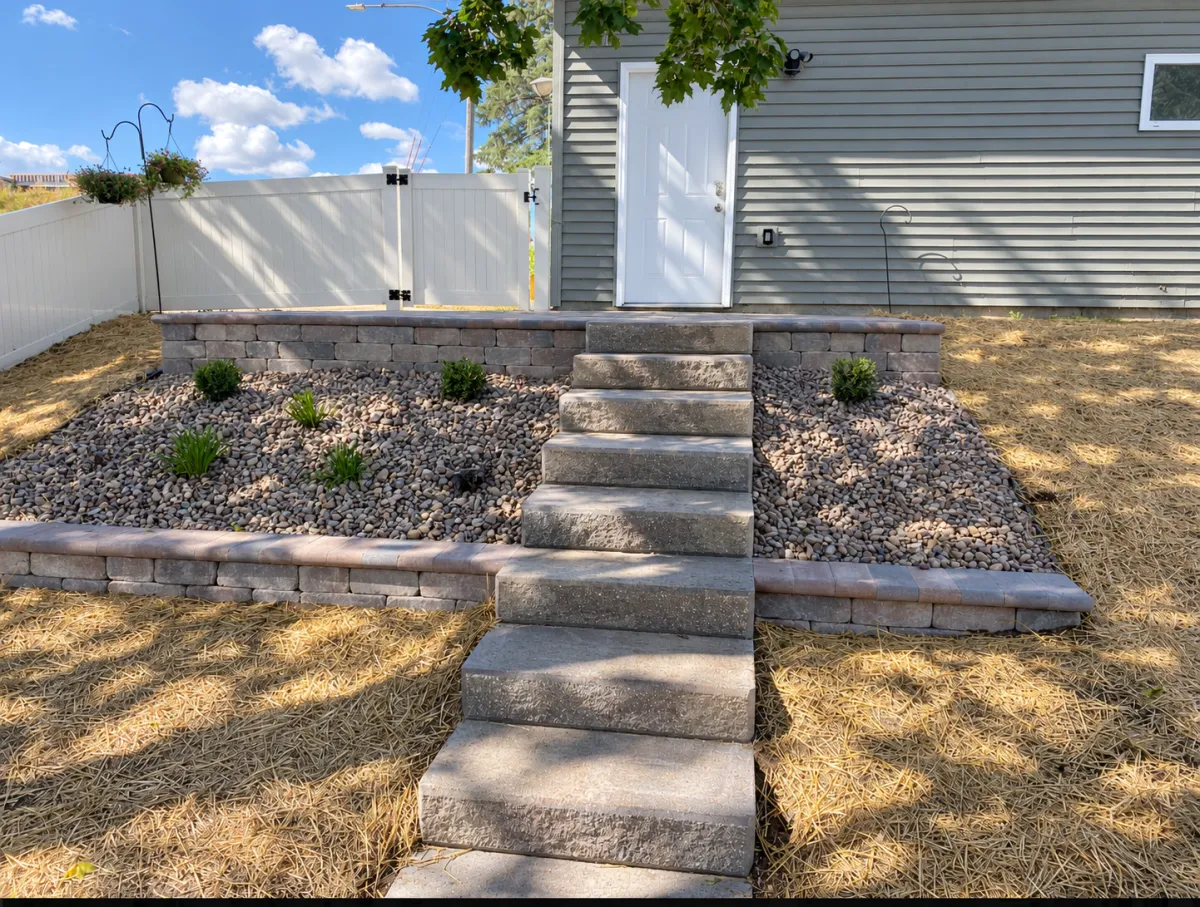
Outdoor step construction
Building steps for outdoor areas, usually stone or concrete.
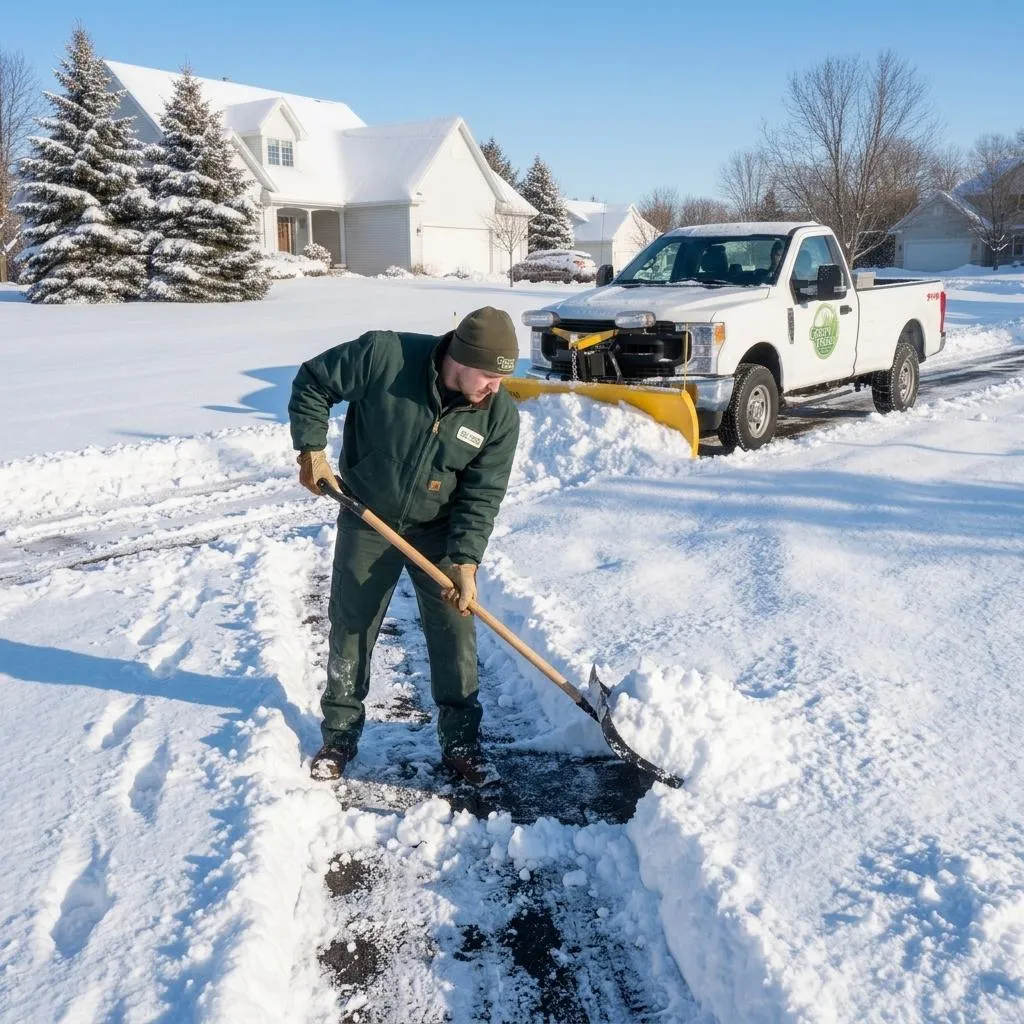
Snow Removal
Clearing snow and ice from driveways, sidewalks, and lots.
Why Walls Fail on Sloped Ground
On a slope, a retaining wall isn't decoration. It's the thing holding the hill up, and it fails for one of two reasons.
The first is drainage. Water moving down a slope collects behind the wall. If there's no drainage layer and no way out, that water pushes, and it pushes harder every time it freezes. A wall that leans a little more every spring is a wall with water behind it.
The second is the footing. Wisconsin code puts footings below the frost line or at least 48 inches down, whichever is deeper. A wall built on a shallow footing on ground that freezes will move, and no amount of good block hides it.
How we build: Both are also entirely avoidable, and neither is expensive to get right at the time. Drainage behind the wall and a footing dug to the depth the ground requires. It's the same wall from the front either way. The difference only shows up years later.
Why Walls Fail on Sloped Ground
On a slope, a retaining wall isn't decoration. It's the thing holding the hill up, and it fails for one of two reasons.
The first is drainage. Water moving down a slope collects behind the wall. If there's no drainage layer and no way out, that water pushes, and it pushes harder every time it freezes. A wall that leans a little more every spring is a wall with water behind it.
The second is the footing. Wisconsin code puts footings below the frost line or at least 48 inches down, whichever is deeper. A wall built on a shallow footing on ground that freezes will move, and no amount of good block hides it.
How we build: Both are also entirely avoidable, and neither is expensive to get right at the time. Drainage behind the wall and a footing dug to the depth the ground requires. It's the same wall from the front either way. The difference only shows up years later.
Why Walls Fail on Sloped Ground
On a slope, a retaining wall isn't decoration. It's the thing holding the hill up, and it fails for one of two reasons.
The first is drainage. Water moving down a slope collects behind the wall. If there's no drainage layer and no way out, that water pushes, and it pushes harder every time it freezes. A wall that leans a little more every spring is a wall with water behind it.
The second is the footing. Wisconsin code puts footings below the frost line or at least 48 inches down, whichever is deeper. A wall built on a shallow footing on ground that freezes will move, and no amount of good block hides it.
How we build: Both are also entirely avoidable, and neither is expensive to get right at the time. Drainage behind the wall and a footing dug to the depth the ground requires. It's the same wall from the front either way. The difference only shows up years later.
Sloped Lot in Cross Plains?
We'll walk the grade, tell you whether it needs a wall or just better drainage, and give you one number. Call Madison Green Team at (608) 573-8889 or request a free quote online. Verona-based, twenty-five minutes out.
HOW WE BRING YOUR OUTDOOR
VISION TO LIFE
Get in Touch
Call 608-573-8889 or use our contact form to tell us about your project.
Plan & Design
We assess your property, discuss your needs, and provide a detailed design or service plan.
Build & Maintain
Our team completes installation or maintenance, keeping your landscape beautiful and functional.
Our Dane County Landscaping Service Areas
Based in Verona, we serve Madison, Middleton, Sun Prairie, Fitchburg, Waunakee, Mount Horeb, Cross Plains, and more.
Not sure if we cover your area?
Give us a call - we likely do.
Contact Us
Monday-Saturday: 7:00AM - 6:00PM
Closed Sunday


