
Landscaping & Hardscaping in Stoughton, WI
On the Yahara below Lake Kegonsa, built on what the meltwater left.

Stoughton sits on a buried river valley. Before the last glacier, a deep valley ran south through here; the ice filled it with sand, gravel and boulders carried by meltwater, and the Yahara now runs across the top of that fill on its way out of Lake Kegonsa. Meltwater-sorted ground behaves differently from the jumbled moraine till a few miles west: it is looser, it drains fast, and water moves through it rather than over it.


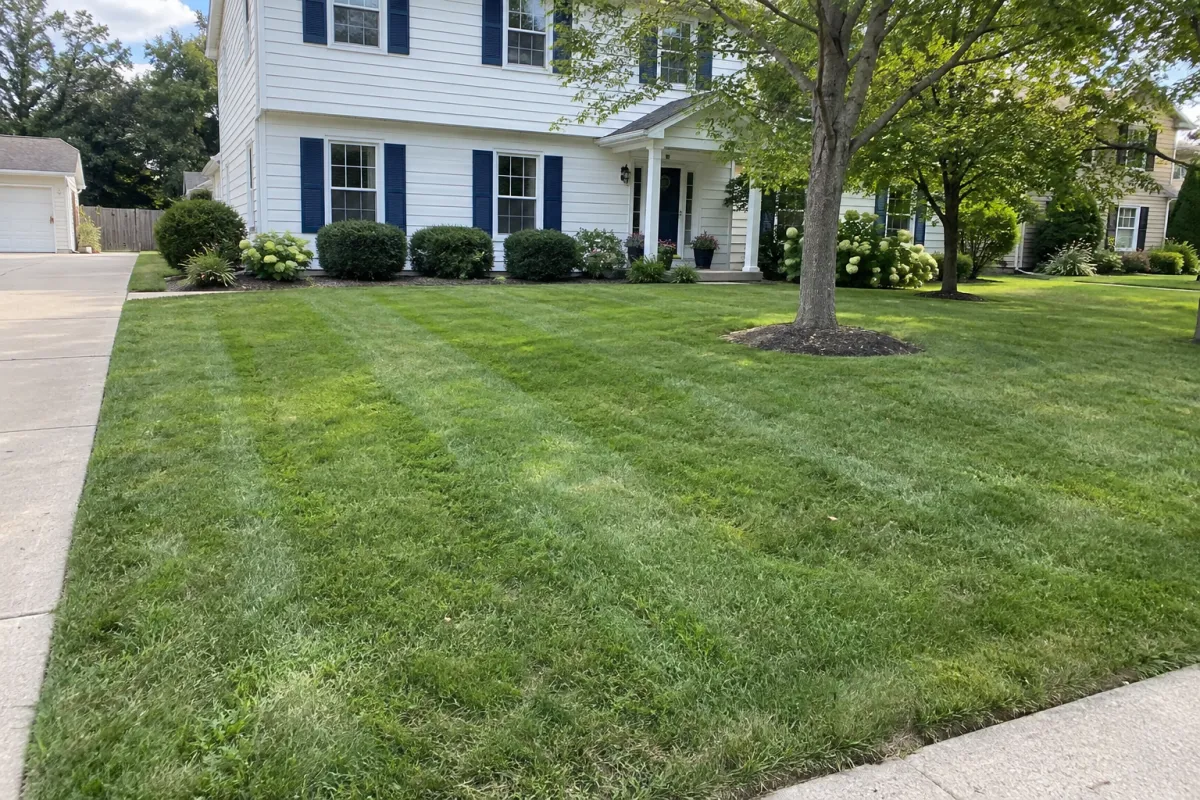
Ground Conditions
What Stoughton Yards Are Actually Dealing With
Outwash, not till. The material here was sorted by running water into layers of sand and gravel. That makes it loose and fast-draining, and it means what holds firm in one layer may sit on something looser underneath.
Water moves underground, not across. On sandy outwash, surface water disappears quickly. That looks like good drainage, and mostly it is, but it also means water is travelling through the ground beneath patios and walls rather than running off the top.
An older housing stock. Much of Stoughton is long-established, so a lot of the walks, steps and walls we are asked about were built decades ago and have had time to show what they were built on.
The Yahara corridor. Properties near the river sit low and wet compared with the rest of the city, and that ground behaves nothing like the sandy terraces above it.
What We Get Called For Most in Stoughton
Retaining wall repair. Walls on loose outwash that have moved, where the honest first question is repair or rebuild.
Paver patio construction. Rebuilding patios and walks that have settled unevenly, on a base built to stay put this time.
Outdoor step construction. Steps at older properties that have dropped or gone uneven at the risers.
Lawn fertilization & treatment. Sandy ground holds less of what you put on it, so timing and rate matter more here than volume.
Downspout drainage extensions. Along the river corridor and the low ground, where roof water needs to be carried well clear of the house.
Top Services for Stoughton
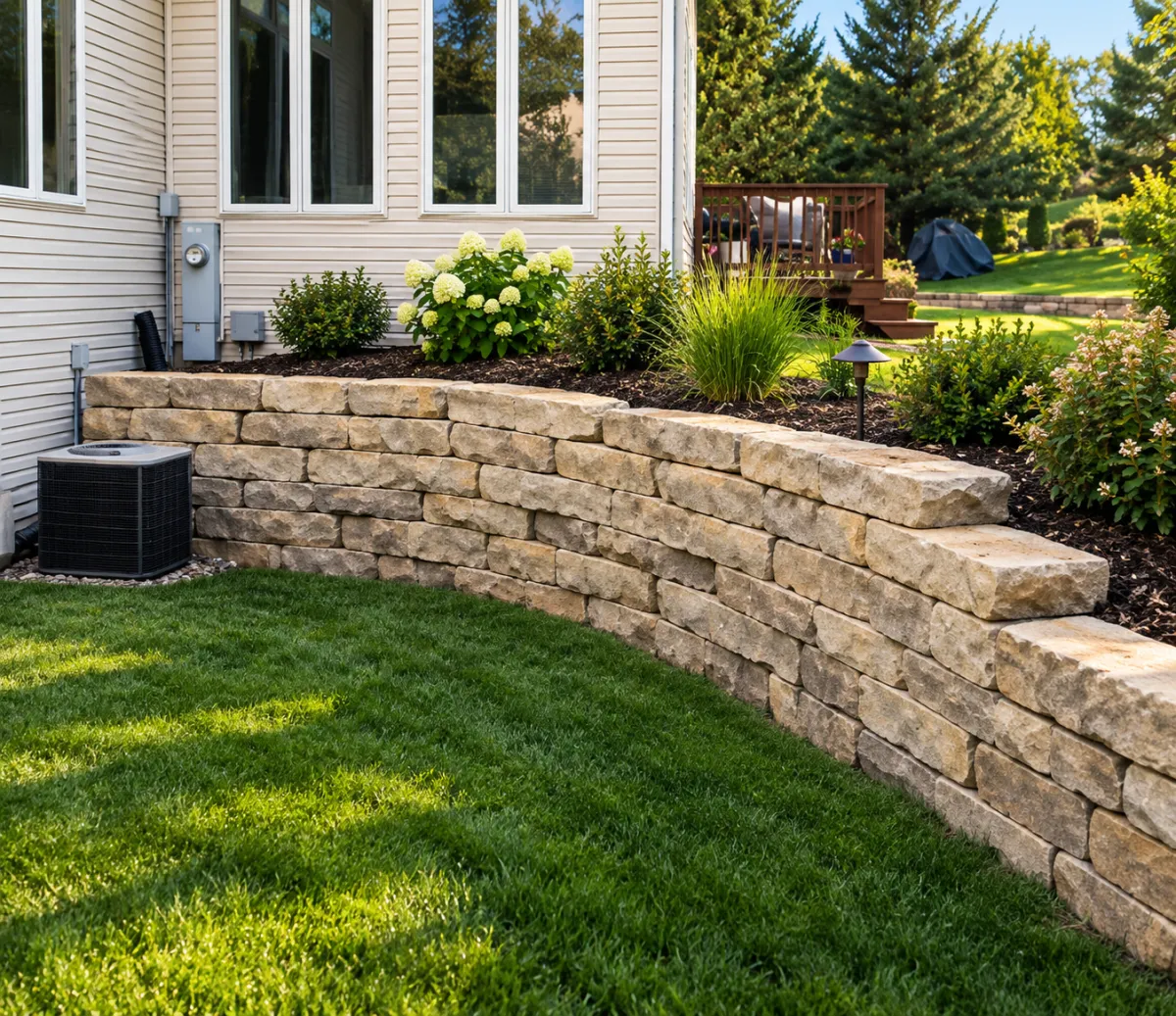
Retaining wall repair
Fixing damaged or failing retaining walls.
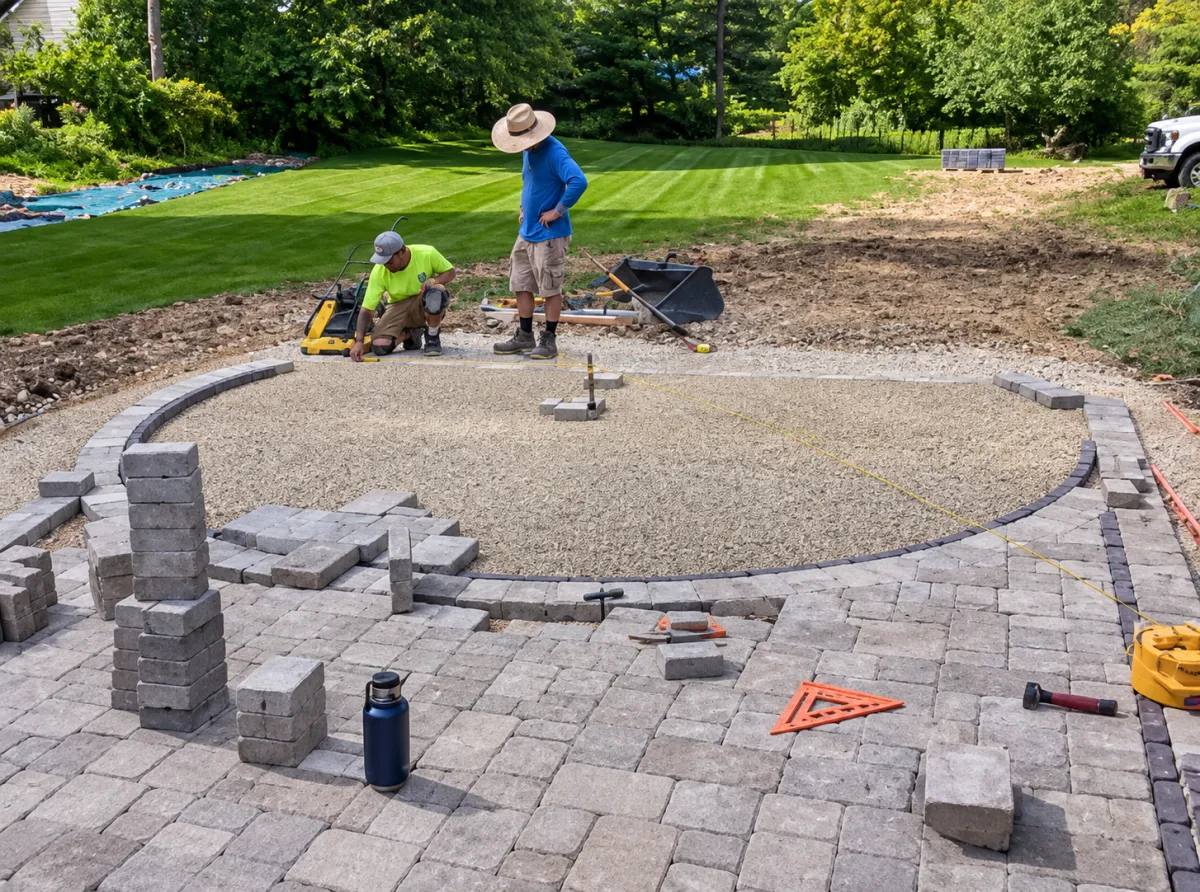
Paver Patio & Patio Installation
Building a patio using individual pavers (stone/concrete blocks).
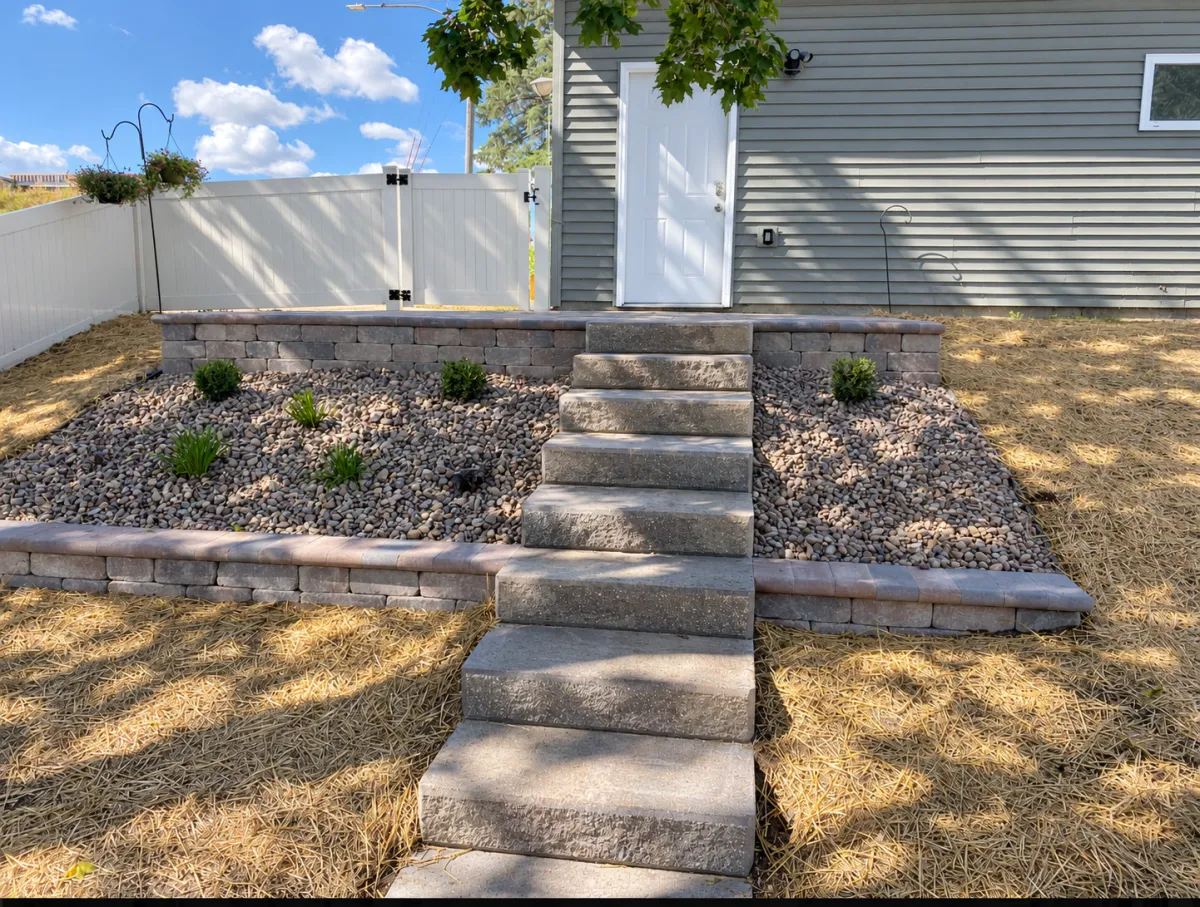
Outdoor step construction
Building steps for outdoor areas, usually stone or concrete.
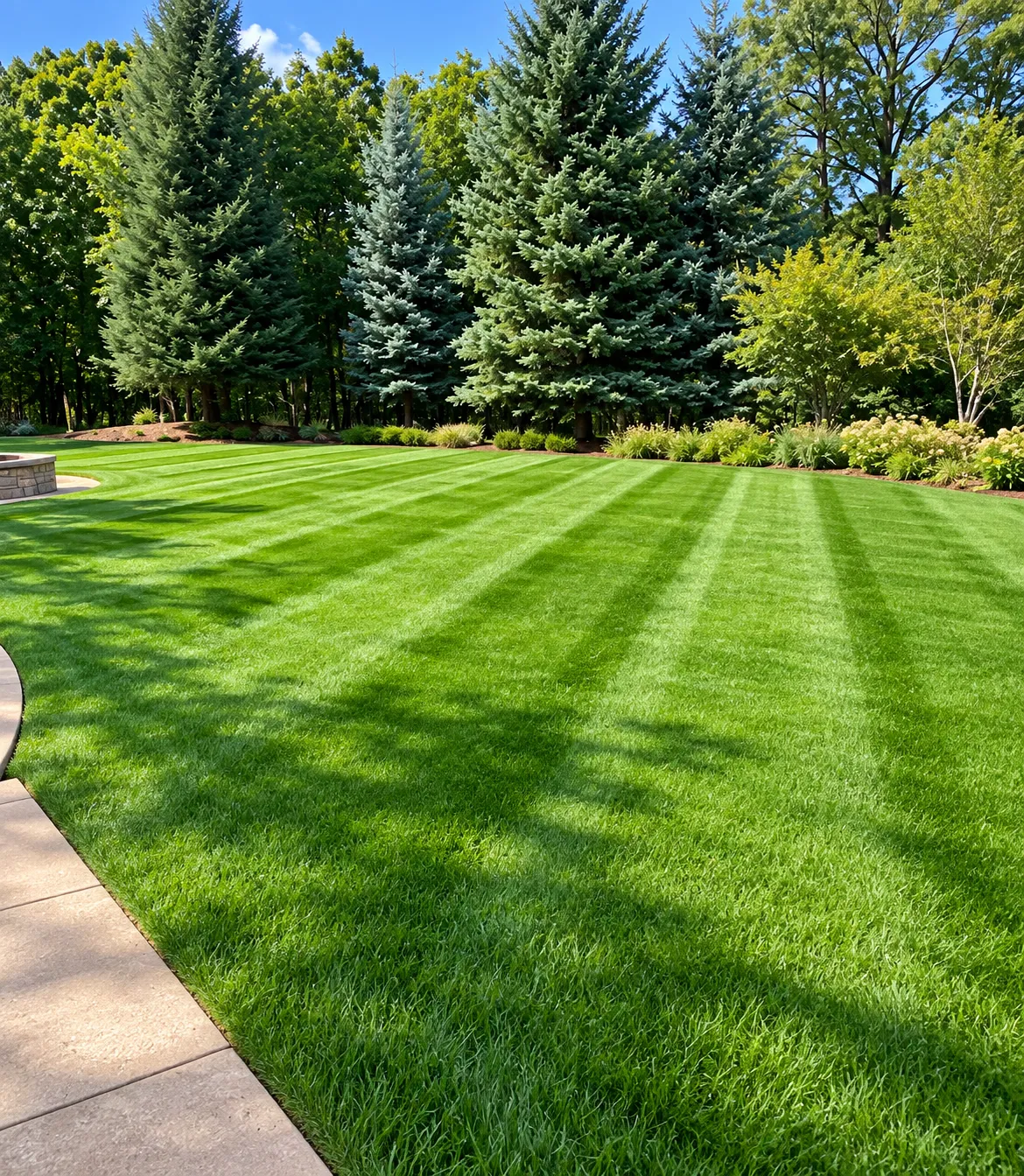
Lawn fertilization & treatment
Applying fertilizer/treatments to grow a healthier lawn.
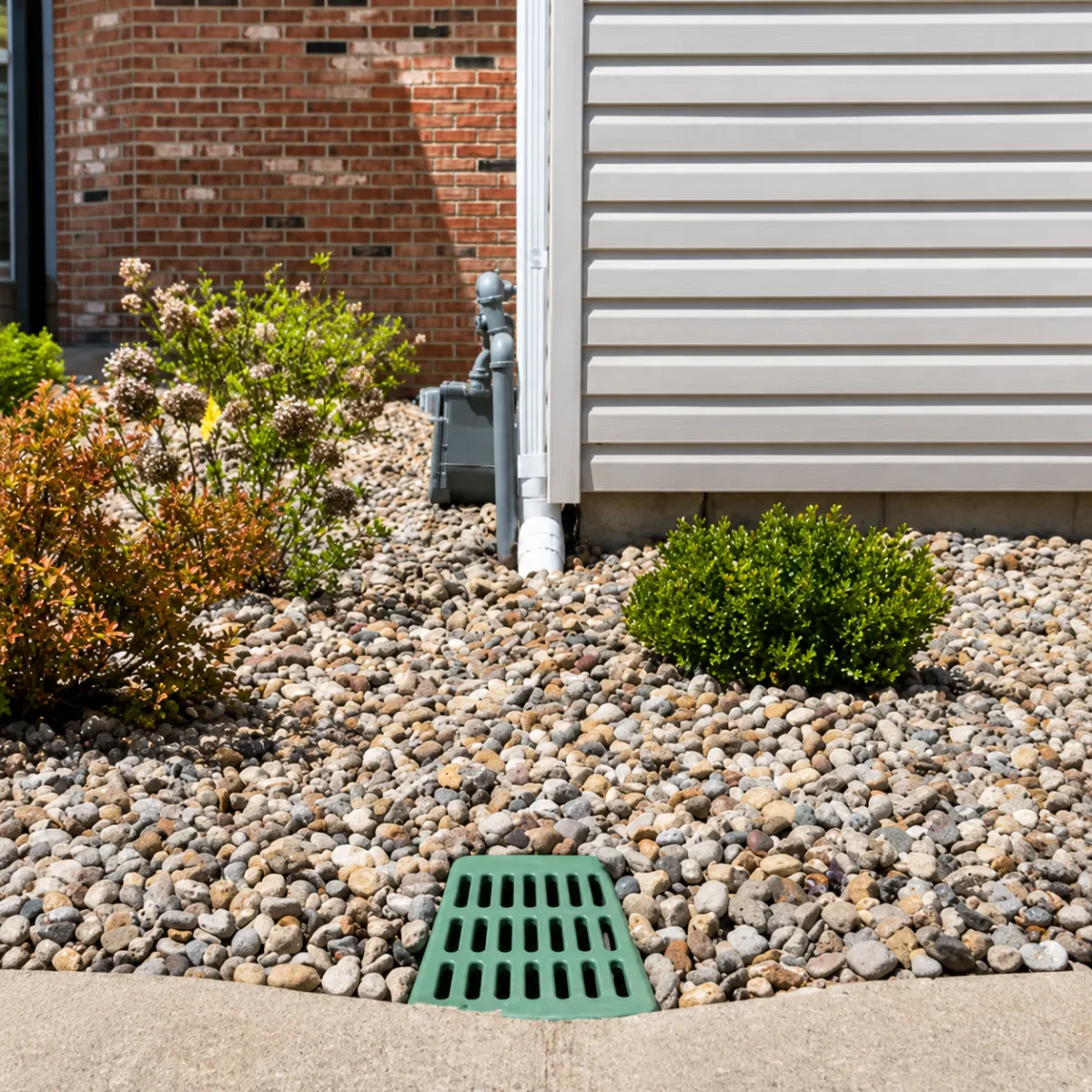
Downspout drainage extensions
Extending gutter downspouts to move water further from the house.
Why Old Hardscaping in Stoughton Settles Unevenly
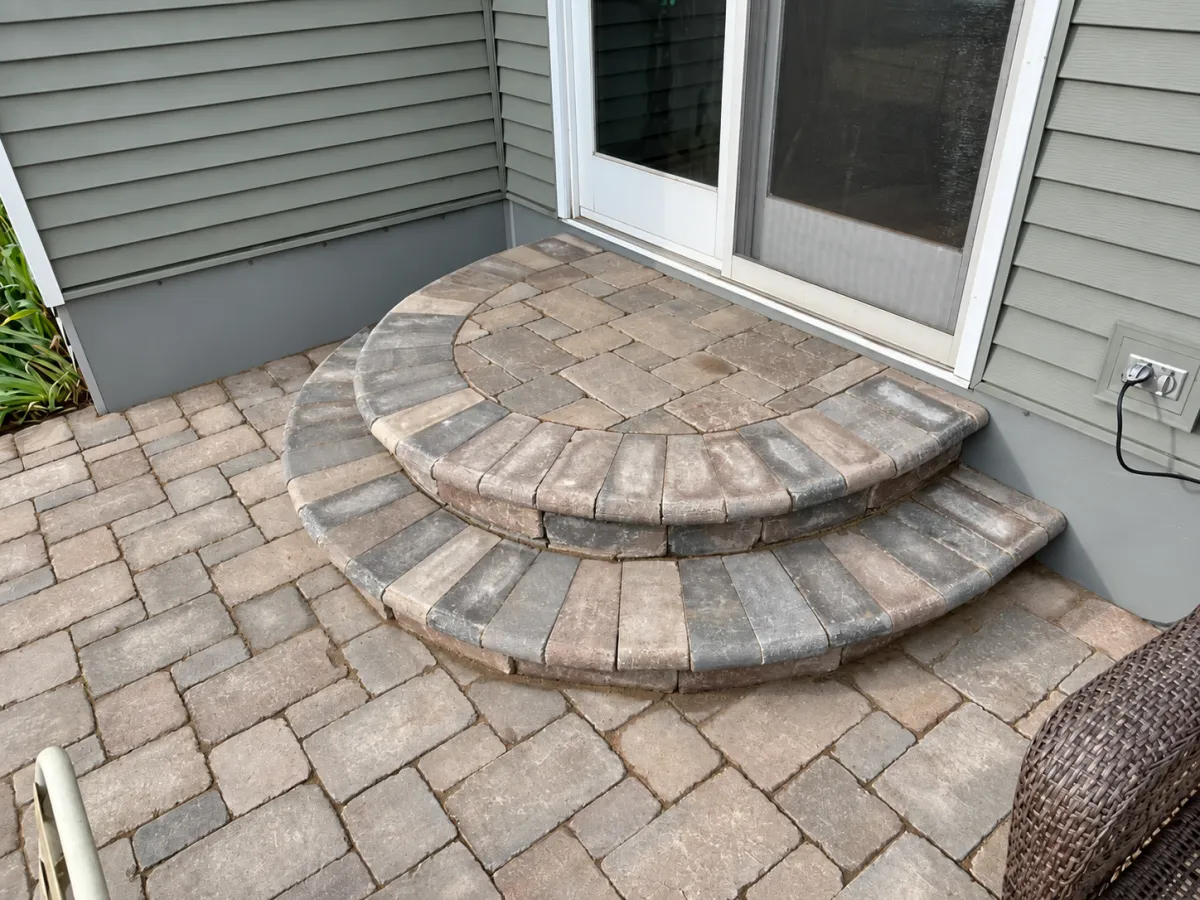
A patio or walk that was fine for fifteen years starts to dip in one area. Nothing changed above ground. No tree roots, no obvious cause.
On outwash the usual cause is underneath. Sand and gravel compact well, but water moving through them carries the fine material with it over time. Remove enough fines from one part of a base and the layer above loses support and drops, while the section next to it stays exactly where it was. That is why the settling is uneven rather than general, and why it often shows up as one low corner rather than a whole surface sinking evenly.
This is a slow problem, which is why it tends to surface on older work. It is also why rebuilding on the original base usually buys only a few years.
How we build: The fix is a base built to resist that movement rather than one that simply fills the hole: excavate to undisturbed material, build back in compacted lifts with properly graded aggregate, and give water a deliberate route so it is not finding its own path through the base. On this ground, relaying pavers over the old base is a repair with a short life.
We Will Look at What Is Under It
If something has moved, the useful question is what is beneath it, not what is on top. Matt will walk it with you and tell you honestly whether it is a repair or a rebuild. Call Madison Green Team at (608) 573-8889 or request a free quote online.
HOW WE BRING YOUR OUTDOOR
VISION TO LIFE
Get in Touch
Call 608-573-8889 or use our contact form to tell us about your project.
Plan & Design
We assess your property, discuss your needs, and provide a detailed design or service plan.
Build & Maintain
Our team completes installation or maintenance, keeping your landscape beautiful and functional.
Our Dane County Landscaping Service Areas
Based in Verona, we serve Madison, Middleton, Sun Prairie, Fitchburg, Waunakee, Mount Horeb, Cross Plains, and more.
Not sure if we cover your area?
Give us a call - we likely do.
Stoughton Landscaping Questions
Why do patios and walks settle unevenly in Stoughton?
Much of Stoughton sits on sand and gravel laid down by glacial meltwater. It drains fast, but water moves through it underneath patios and walks, and a firm layer can sit on a looser one. A base built and compacted for that ground keeps the surface level.
Why are the steps on my older Stoughton home dropping at the risers?
Many Stoughton homes are decades old, and their steps were built on whatever was underneath at the time. On loose, sandy ground, a step’s base can shift over the years, which shows up as uneven or sinking risers. Rebuilding the base is what fixes it.
Does Stoughton’s sandy soil change how a lawn should be fertilized?
Yes, sandy soil changes how a lawn should be fertilized. Stoughton’s sandy ground holds less of what you put on it, so timing and rate matter more here than amount. Smaller, well-timed applications keep more of the fertilizer where the grass can use it.
Is drainage different near the Yahara River in Stoughton?
Yes, drainage is different near the Yahara. Properties along the river sit low and wet compared with the sandy ground above them, so roof water needs to be carried well clear of the house instead of left to soak in near the foundation.
Is it worth repairing an older retaining wall in Stoughton?
Repairing an older Stoughton retaining wall is sometimes worth it. Walls on loose outwash that have moved need an honest look first: if one section has shifted, it can often be rebuilt on a better base; if the whole wall is failing, replacing it is usually the better value.
Contact Us
Monday-Saturday: 7:00AM - 6:00PM
Closed Sunday
Facebook
Instagram
TikTok