
Garden Retaining Walls in Verona & Madison, WI
Walls that hold a grade around beds and garden areas, built with the drainage that keeps them standing.
Garden Retaining Walls in Verona & Madison, WI
Walls that hold a grade around beds and garden areas, built with the drainage that keeps them standing.
Dane County yards aren’t flat. A slope from the driveway to the front door, a drop from the patio to the lawn, a hillside garden you can’t get to safely, all of it needs steps that stay level and don’t shift when the ground freezes and thaws. We build them into the site properly the first time, not set on top of it.
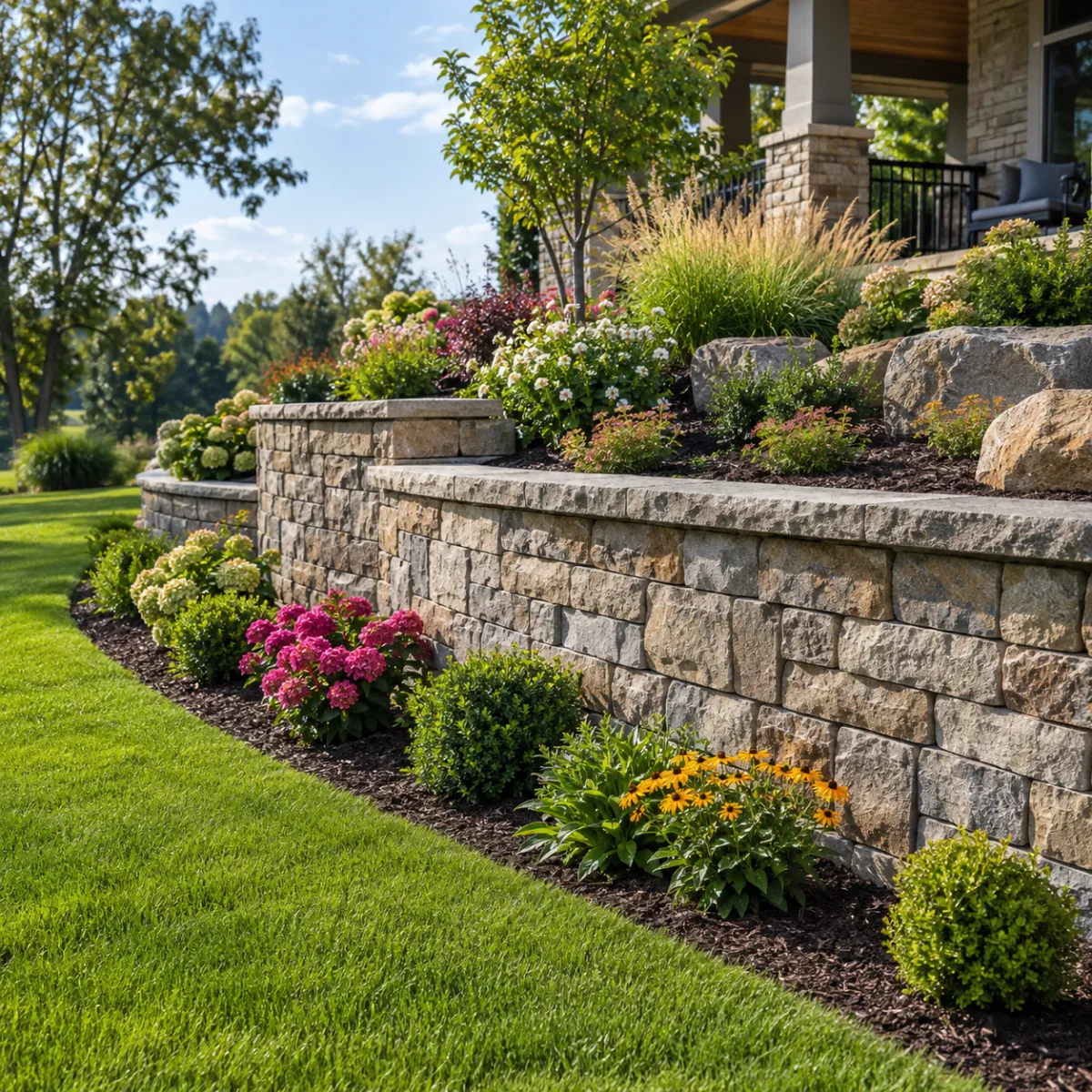
A garden retaining wall is doing structural work even when it's only two feet tall. It's holding soil, and behind that soil is water. On Dane County clay, that water has nowhere to drain, so it collects behind the wall and pushes, and it pushes harder every time it freezes. Height doesn't decide whether a wall needs drainage. Being a retaining wall does. If your wall isn't holding anything back, you want garden wall construction instead, which is a simpler and cheaper build.

What a Garden Retaining Wall Needs That a Garden Wall Doesn't
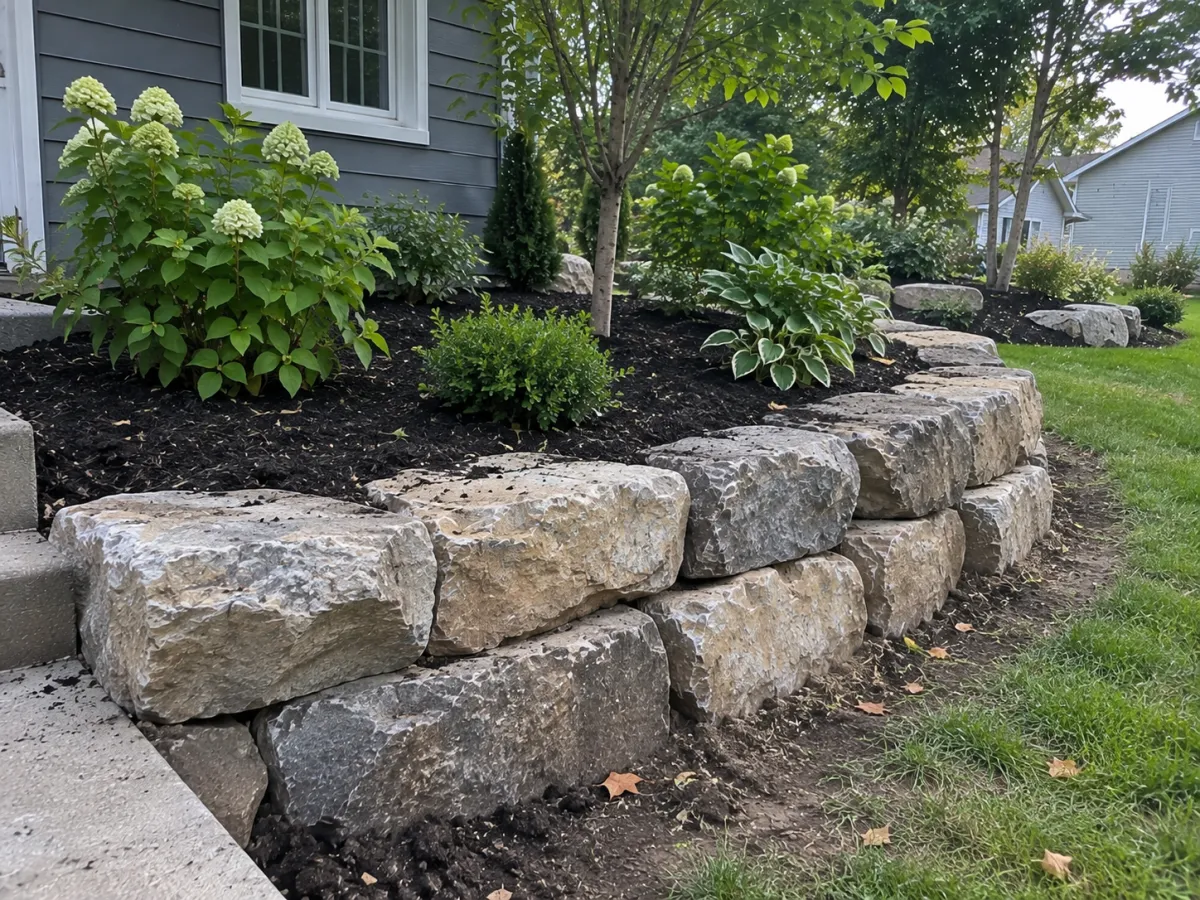
Drainage behind the wall, not just block in front of it. Gravel backfill and a way for water to get out. This is the single difference that decides whether a low wall lasts.
A footing sized for what it's holding. Below the frost line, and wider than a freestanding wall of the same height needs.
Licensed and insured. Ask us for proof. Ask everyone you’re considering.
Honest scoping on height. Past a certain height a garden retaining wall stops being a garden project and becomes an engineered one. We'll tell you where your project sits rather than quietly building to the edge of what's safe.
If the wall is part of a bigger grade problem, it's often worth looking at yard grading and drainage at the same time, since a wall alone sometimes moves the water rather than solving it.
A garden retaining wall is doing structural work even when it's only two feet tall. It's holding soil, and behind that soil is water. On Dane County clay, that water has nowhere to drain, so it collects behind the wall and pushes, and it pushes harder every time it freezes. Height doesn't decide whether a wall needs drainage. Being a retaining wall does. If your wall isn't holding anything back, you want garden wall construction instead, which is a simpler and cheaper build.
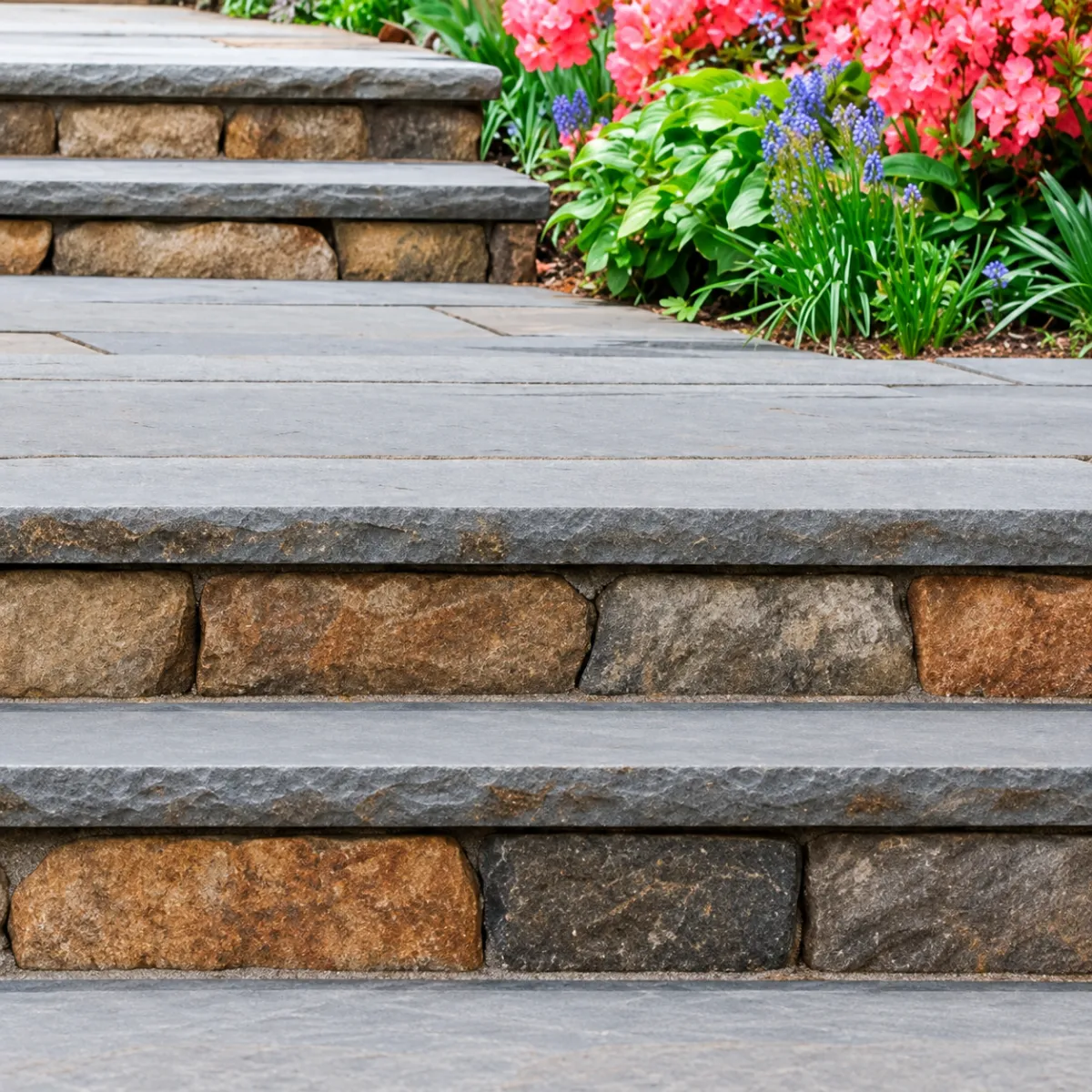
Dane County yards aren’t flat. A slope from the driveway to the front door, a drop from the patio to the lawn, a hillside garden you can’t get to safely, all of it needs steps that stay level and don’t shift when the ground freezes and thaws. We build them into the site properly the first time, not set on top of it.
What a Garden Retaining Wall Needs That a Garden Wall Doesn't
Drainage behind the wall, not just block in front of it. Gravel backfill and a way for water to get out. This is the single difference that decides whether a low wall lasts.
A footing sized for what it's holding. Below the frost line, and wider than a freestanding wall of the same height needs.
Licensed and insured. Ask us for proof. Ask everyone you’re considering.
Honest scoping on height. Past a certain height a garden retaining wall stops being a garden project and becomes an engineered one. We'll tell you where your project sits rather than quietly building to the edge of what's safe.
If the wall is part of a bigger grade problem, it's often worth looking at yard grading and drainage at the same time, since a wall alone sometimes moves the water rather than solving it.
What a Garden Retaining Wall Needs That a Garden Wall Doesn't
Drainage behind the wall, not just block in front of it. Gravel backfill and a way for water to get out. This is the single difference that decides whether a low wall lasts.
A footing sized for what it's holding. Below the frost line, and wider than a freestanding wall of the same height needs.
Licensed and insured. Ask us for proof. Ask everyone you’re considering.
Honest scoping on height. Past a certain height a garden retaining wall stops being a garden project and becomes an engineered one. We'll tell you where your project sits rather than quietly building to the edge of what's safe.
If the wall is part of a bigger grade problem, it's often worth looking at yard grading and drainage at the same time, since a wall alone sometimes moves the water rather than solving it.
Related Services
Retaining Wall Services for Madison, Verona & the Surrounding Area
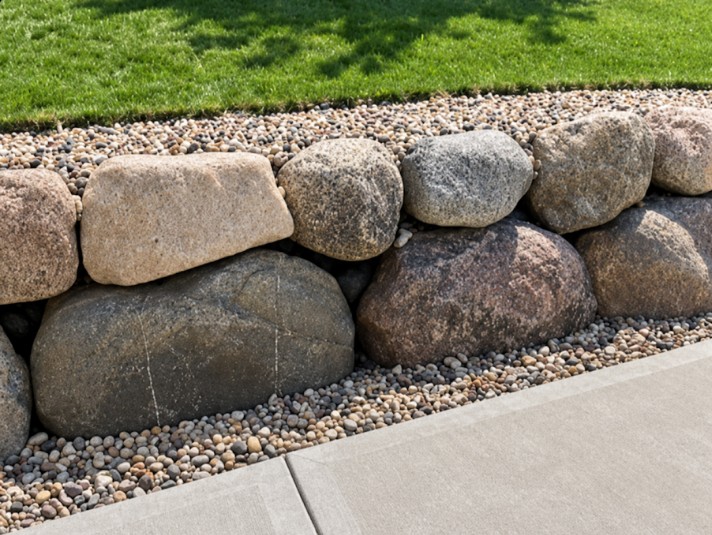
Boulder Retaining Wall Installation & Design
Building retaining walls out of large boulders.
Segmental Block Walls
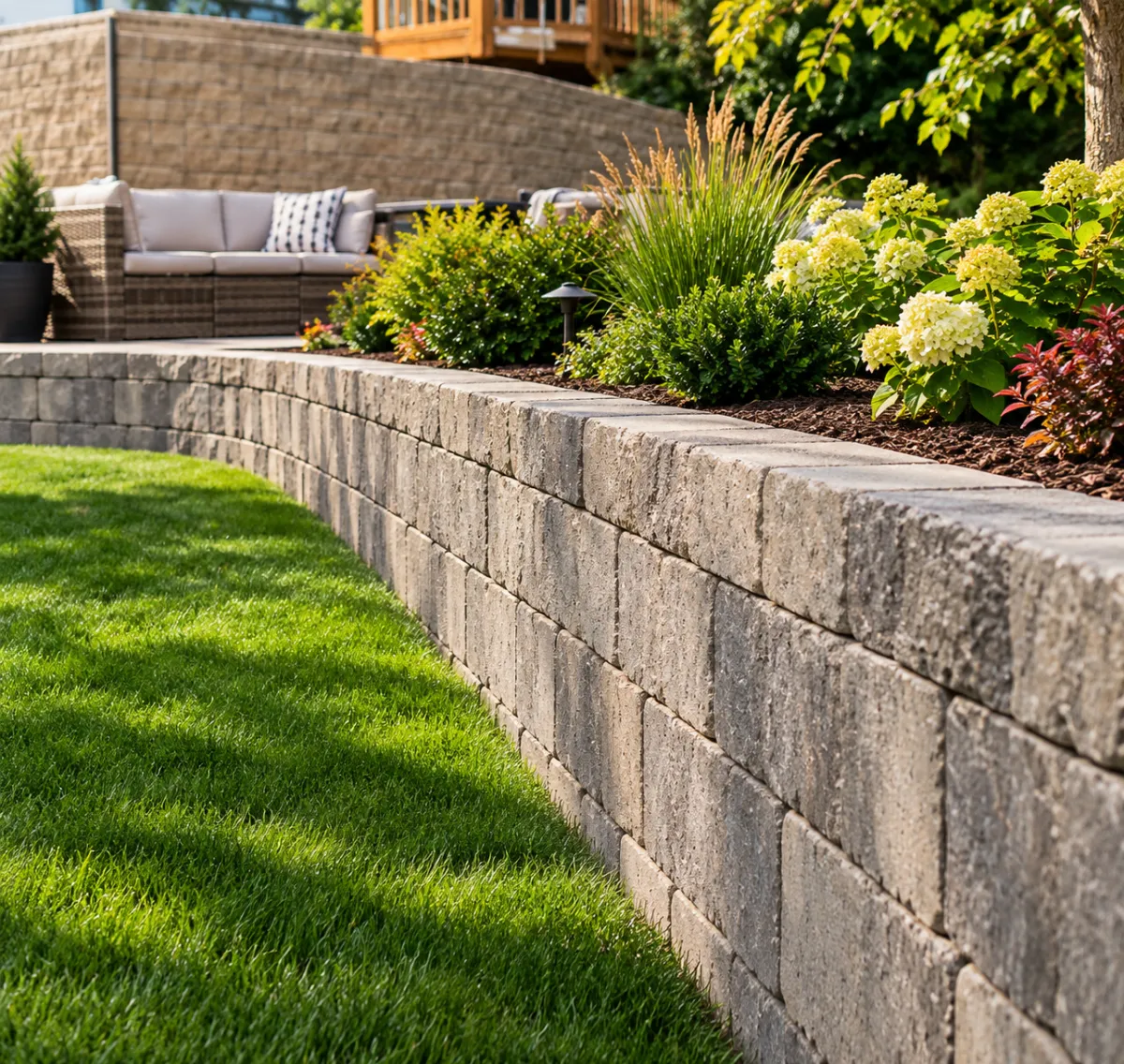
Retaining walls built from interlocking concrete blocks.
Retaining Wall Repair
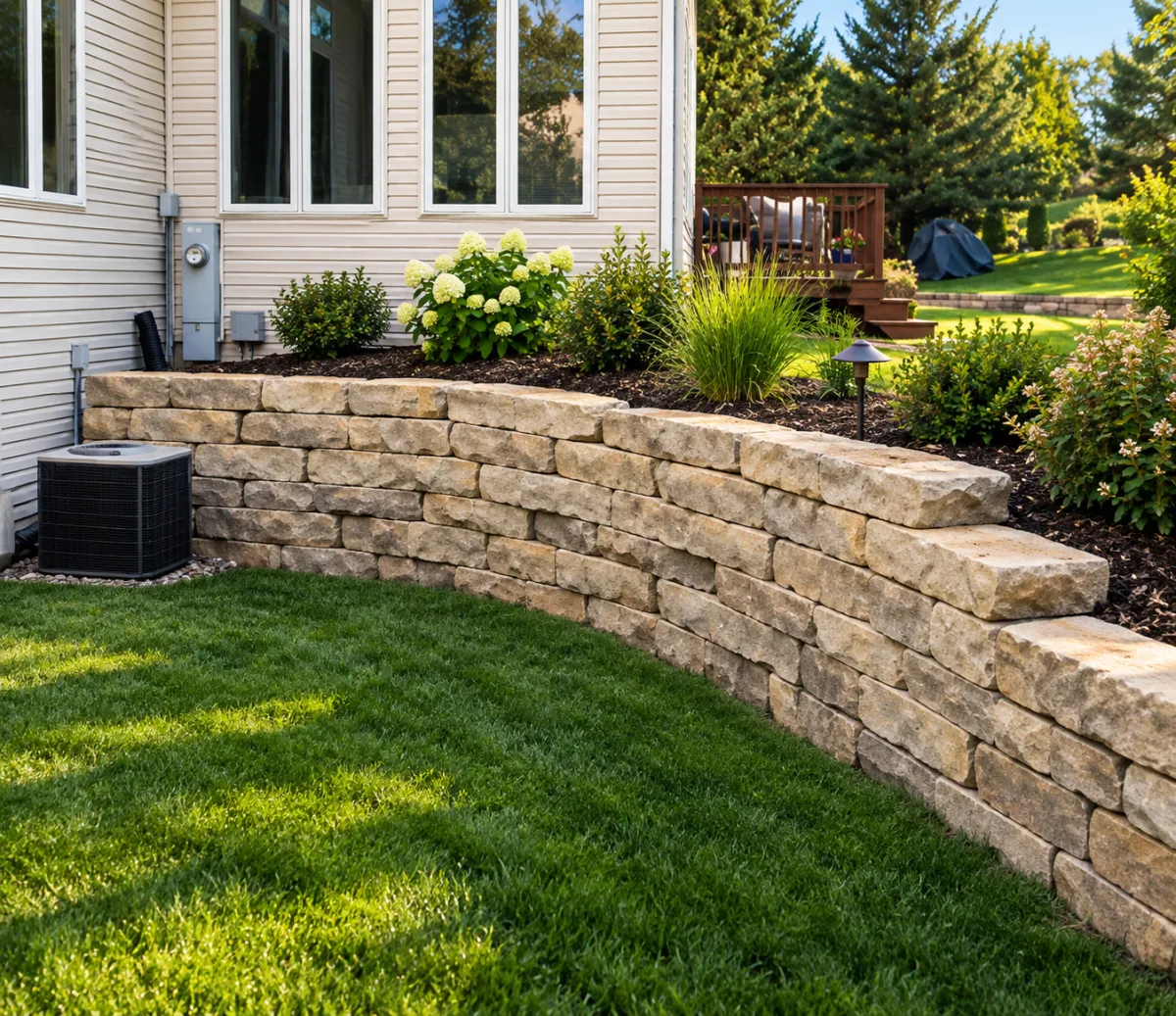
Fixing damaged or failing retaining walls.
Why Low Retaining Walls Fail Just as Often as Tall Ones
Short walls get treated as decorative projects, which is exactly why so many of them lean.
A two-foot wall holding back clay is still holding back clay, and clay holds water. Water that can't drain collects behind the wall, and when it freezes it expands with nowhere to go except forward, into the back of the wall. That pressure doesn't care how tall the wall is. A short wall built with no drainage layer fails the same way a tall one does, just with less drama. Watch for:
Leaning outward a little more each spring, which is water pressure rather than settling
Bulging in the middle courses where the pressure is highest
Soil and mulch washing out over the top because there's no drainage path through
Beds above the wall staying waterlogged, since the wall is now damming the water instead of the slope shedding it
How we build: All four are the same problem wearing different clothes: water with nowhere to go. Gravel backfill behind the wall, a drainage outlet, and a footing below frost depth fix it, and they cost far less to include during the build than to retrofit after the wall has already moved.
Checking the Grade Before We Quote
We look at how much soil the wall is actually holding and where the water behind it will go, then give you a quote with a real number. If the site turns out not to need a retaining wall at all, we'll say so and quote the simpler build instead.
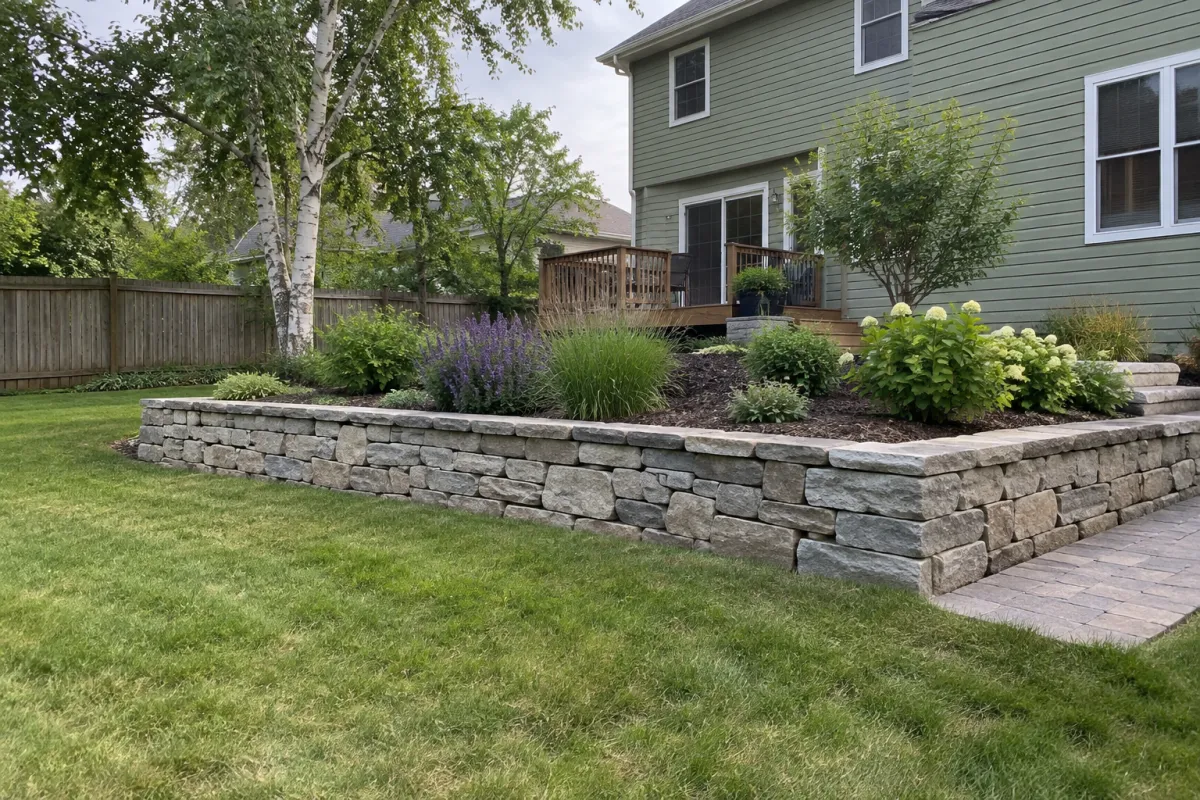
Why Low Retaining Walls Fail Just as Often as Tall Ones
Short walls get treated as decorative projects, which is exactly why so many of them lean.
A two-foot wall holding back clay is still holding back clay, and clay holds water. Water that can't drain collects behind the wall, and when it freezes it expands with nowhere to go except forward, into the back of the wall. That pressure doesn't care how tall the wall is. A short wall built with no drainage layer fails the same way a tall one does, just with less drama. Watch for:
Leaning outward a little more each spring, which is water pressure rather than settling
Bulging in the middle courses where the pressure is highest
Soil and mulch washing out over the top because there's no drainage path through
Beds above the wall staying waterlogged, since the wall is now damming the water instead of the slope shedding it
How we build: All four are the same problem wearing different clothes: water with nowhere to go. Gravel backfill behind the wall, a drainage outlet, and a footing below frost depth fix it, and they cost far less to include during the build than to retrofit after the wall has already moved.
Checking the Grade Before We Quote
We look at how much soil the wall is actually holding and where the water behind it will go, then give you a quote with a real number. If the site turns out not to need a retaining wall at all, we'll say so and quote the simpler build instead.
Why Low Retaining Walls Fail Just as Often as Tall Ones
Short walls get treated as decorative projects, which is exactly why so many of them lean.
A two-foot wall holding back clay is still holding back clay, and clay holds water. Water that can't drain collects behind the wall, and when it freezes it expands with nowhere to go except forward, into the back of the wall. That pressure doesn't care how tall the wall is. A short wall built with no drainage layer fails the same way a tall one does, just with less drama. Watch for:
Leaning outward a little more each spring, which is water pressure rather than settling
Bulging in the middle courses where the pressure is highest
Soil and mulch washing out over the top because there's no drainage path through
Beds above the wall staying waterlogged, since the wall is now damming the water instead of the slope shedding it
How we build: All four are the same problem wearing different clothes: water with nowhere to go. Gravel backfill behind the wall, a drainage outlet, and a footing below frost depth fix it, and they cost far less to include during the build than to retrofit after the wall has already moved.
Checking the Grade Before We Quote
We look at how much soil the wall is actually holding and where the water behind it will go, then give you a quote with a real number. If the site turns out not to need a retaining wall at all, we'll say so and quote the simpler build instead.
What Working With Us Actually Looks Like
You call or fill out the form. We come out, walk the yard with you, and talk through what you’re picturing and what the site will actually allow. You get a quote with a real number, not a range. If it’s a fit, we schedule it and you know who’s showing up.
Got a bed or border that needs holding back?
Call Madison Green Team at (608) 573-8889 or request a free quote online. We'll check what the wall is actually holding and where the water goes, then give you one number. Serving Verona, Madison, Middleton, Fitchburg, Sun Prairie, Waunakee, Cross Plains, and Mount Horeb.
HOW WE BRING YOUR OUTDOOR
VISION TO LIFE
Get in Touch
Call 608-573-8889 or use our contact form to tell us about your project.
Plan & Design
We assess your property, discuss your needs, and provide a detailed design or service plan.
Build & Maintain
Our team completes installation or maintenance, keeping your landscape beautiful and functional.
Our Dane County Landscaping Service Areas
Based in Verona, we serve Madison, Middleton, Sun Prairie, Fitchburg, Waunakee, Mount Horeb, Cross Plains, and more.
Not sure if we cover your area?
Give us a call - we likely do.
Contact Us
Monday-Saturday: 7:00AM - 6:00PM
Closed Sunday


