
Landscaping & Hardscaping in DeForest, WI
At the top of the Yahara, on spring-fed ground.
Landscaping & Hardscaping in DeForest, WI
At the top of the Yahara, on spring-fed ground.

Dane County yards aren’t flat. A slope from the driveway to the front door, a drop from the patio to the lawn, a hillside garden you can’t get to safely, all of it needs steps that stay level and don’t shift when the ground freezes and thaws. We build them into the site properly the first time, not set on top of it.
DeForest sits at the headwaters end of the Yahara, where the river is fed by springs rather than by runoff from upstream. Token Creek nearby rises from some of the largest natural springs in southern Wisconsin and supplies more steady flow to Lake Mendota than any other tributary. Ground fed by springs stays wet on its own schedule, and it comes with rules that most of the county does not have.


Ground Conditions
What DeForest Yards Are Actually Dealing With
Spring-fed ground. Water here comes up as well as falling down. A wet area fed by a spring does not dry out in a dry month, because rainfall was never what was keeping it wet.
Soft, wet soils in places. The DNR describes hydric soils through parts of this area — ground soft enough that working on it is genuinely harder, and soft enough that anything heavy set on it needs its base thought through.
Stormwater rules with teeth. The Token Creek watershed is designated thermally sensitive, because it feeds a cold-water trout stream. That brings stormwater requirements aimed at keeping runoff from warming the creek, and they apply to grading and drainage work here in a way they do not in most of the county.
Fast growth on former farmland. DeForest and Windsor have grown quickly, much of it on ground that was drained for agriculture generations ago. Old farm drainage does not always stay where the plans said it was.
What We Get Called For Most in DeForest
French drain installation & yard drainage. Intercepting water that is arriving from below rather than falling from above.
Erosion control solutions. Required thinking in a thermally sensitive watershed, where what leaves the property matters as much as what stays.
Planting plan design. Choosing for ground that stays wet on its own schedule, not on the weather’s.
Sod installation & grass seeding. New subdivisions starting lawns on ground that was farmland, over drainage tile nobody has a map of.
Commercial snow plowing. The Highway 51 corridor, alongside residential work through the village.

DeForest sits at the headwaters end of the Yahara, where the river is fed by springs rather than by runoff from upstream. Token Creek nearby rises from some of the largest natural springs in southern Wisconsin and supplies more steady flow to Lake Mendota than any other tributary. Ground fed by springs stays wet on its own schedule, and it comes with rules that most of the county does not have.
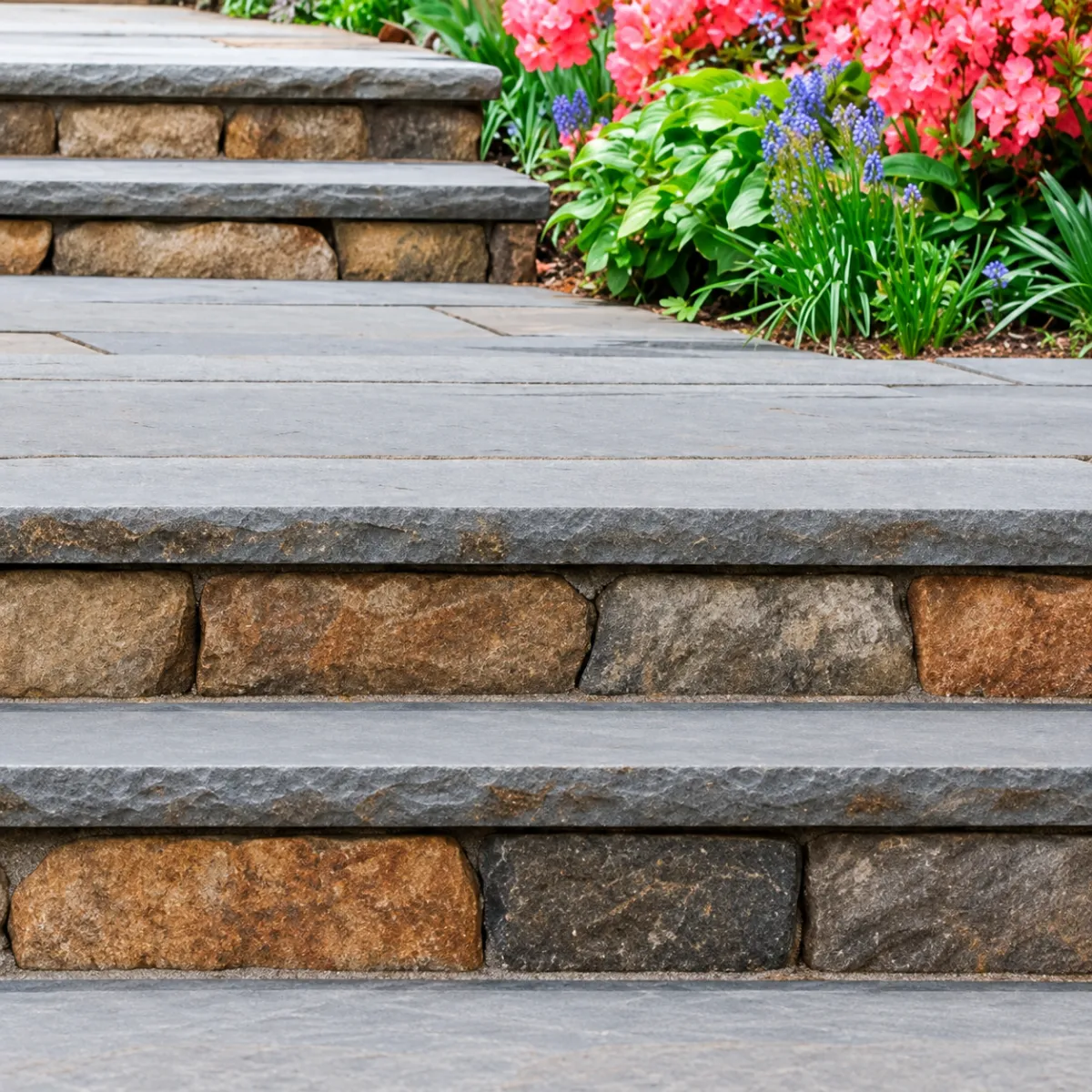
Dane County yards aren’t flat. A slope from the driveway to the front door, a drop from the patio to the lawn, a hillside garden you can’t get to safely, all of it needs steps that stay level and don’t shift when the ground freezes and thaws. We build them into the site properly the first time, not set on top of it.
Ground Conditions
What DeForest Yards Are Actually Dealing With
Spring-fed ground. Water here comes up as well as falling down. A wet area fed by a spring does not dry out in a dry month, because rainfall was never what was keeping it wet.
Soft, wet soils in places. The DNR describes hydric soils through parts of this area — ground soft enough that working on it is genuinely harder, and soft enough that anything heavy set on it needs its base thought through.
Stormwater rules with teeth. The Token Creek watershed is designated thermally sensitive, because it feeds a cold-water trout stream. That brings stormwater requirements aimed at keeping runoff from warming the creek, and they apply to grading and drainage work here in a way they do not in most of the county.
Fast growth on former farmland. DeForest and Windsor have grown quickly, much of it on ground that was drained for agriculture generations ago. Old farm drainage does not always stay where the plans said it was.
What We Get Called For Most in DeForest
French drain installation & yard drainage. Intercepting water that is arriving from below rather than falling from above.
Erosion control solutions. Required thinking in a thermally sensitive watershed, where what leaves the property matters as much as what stays.
Planting plan design. Choosing for ground that stays wet on its own schedule, not on the weather’s.
Sod installation & grass seeding. New subdivisions starting lawns on ground that was farmland, over drainage tile nobody has a map of.
Commercial snow plowing. The Highway 51 corridor, alongside residential work through the village.
Ground Conditions
What DeForest Yards Are Actually Dealing With
Spring-fed ground. Water here comes up as well as falling down. A wet area fed by a spring does not dry out in a dry month, because rainfall was never what was keeping it wet.
Soft, wet soils in places. The DNR describes hydric soils through parts of this area — ground soft enough that working on it is genuinely harder, and soft enough that anything heavy set on it needs its base thought through.
Stormwater rules with teeth. The Token Creek watershed is designated thermally sensitive, because it feeds a cold-water trout stream. That brings stormwater requirements aimed at keeping runoff from warming the creek, and they apply to grading and drainage work here in a way they do not in most of the county.
Fast growth on former farmland. DeForest and Windsor have grown quickly, much of it on ground that was drained for agriculture generations ago. Old farm drainage does not always stay where the plans said it was.
What We Get Called For Most in DeForest
French drain installation & yard drainage. Intercepting water that is arriving from below rather than falling from above.
Erosion control solutions. Required thinking in a thermally sensitive watershed, where what leaves the property matters as much as what stays.
Planting plan design. Choosing for ground that stays wet on its own schedule, not on the weather’s.
Sod installation & grass seeding. New subdivisions starting lawns on ground that was farmland, over drainage tile nobody has a map of.
Commercial snow plowing. The Highway 51 corridor, alongside residential work through the village.
Services, Ranked for DeForest
What We Get Called For Most in DeForest
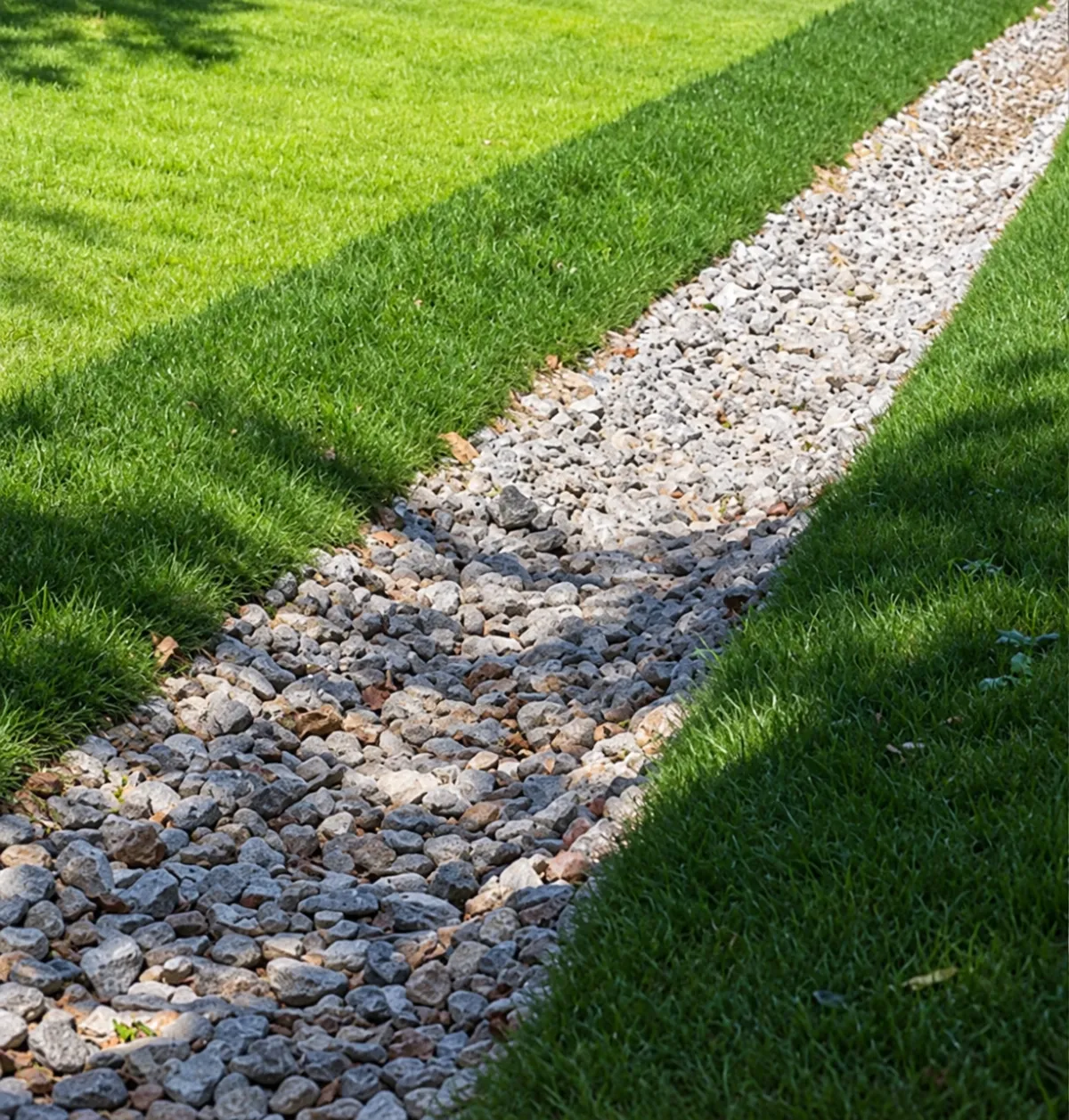
French drain installation & yard drainage
Installing underground pipes to redirect water away from problem areas.
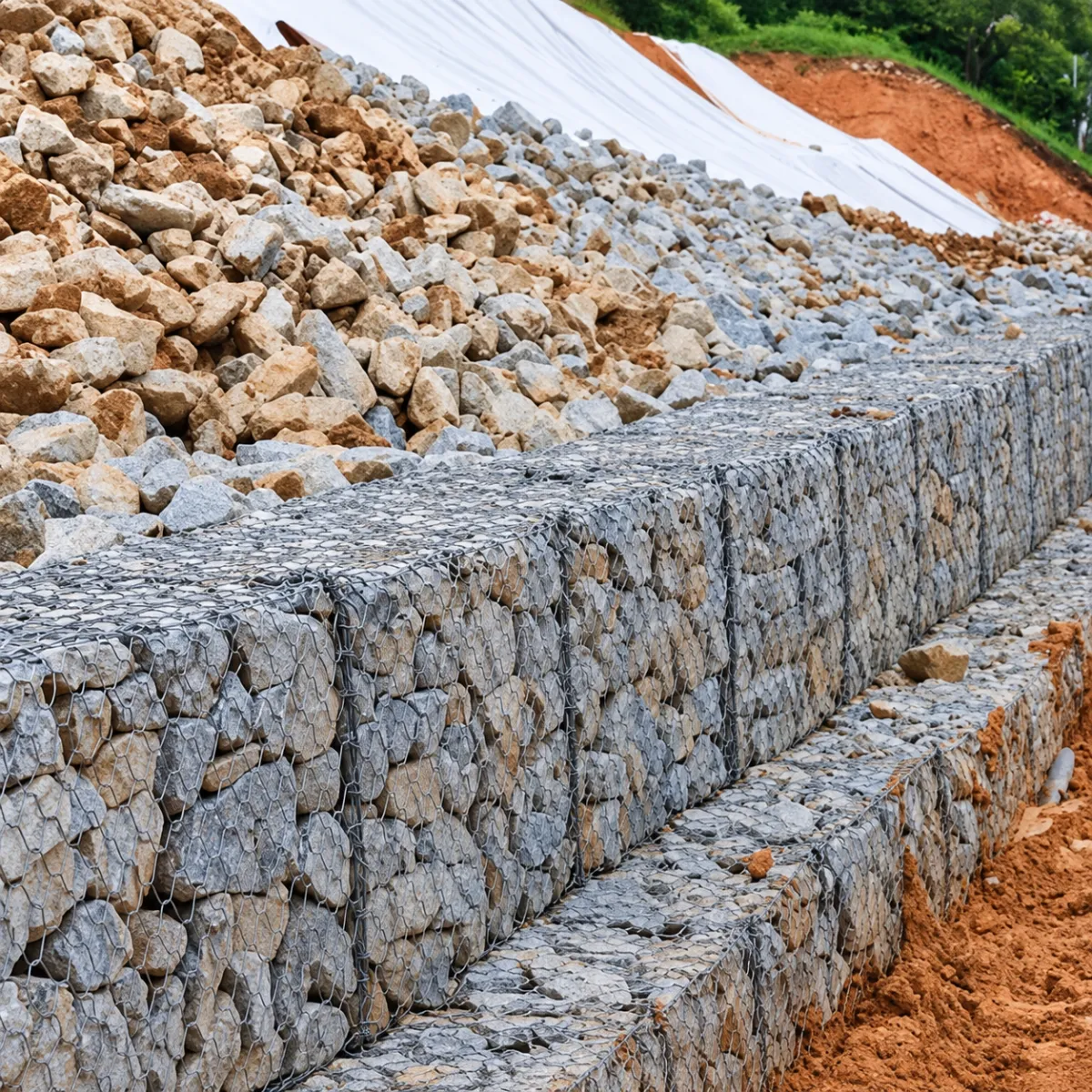
Erosion control solutions
Preventing soil from washing away.
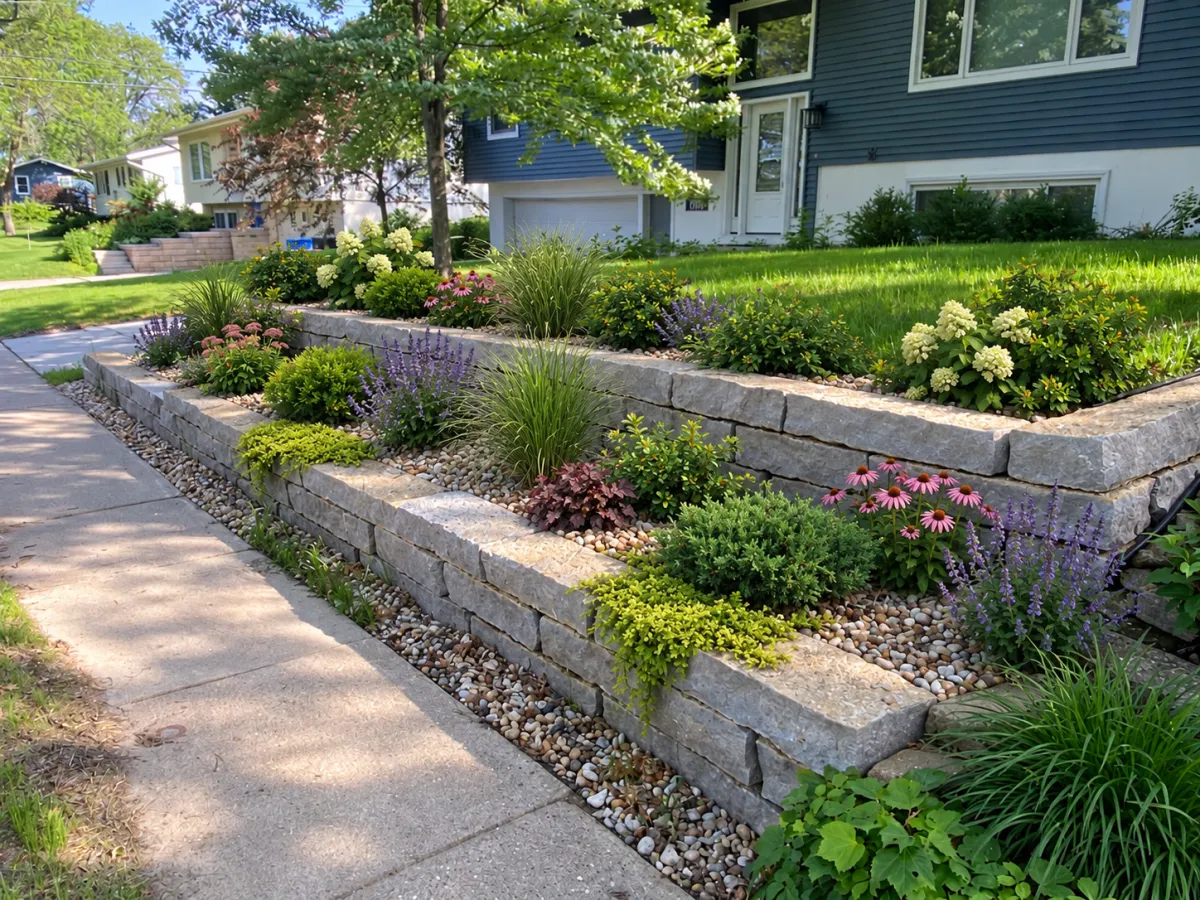
Planting plan design
Designing what plants go where.
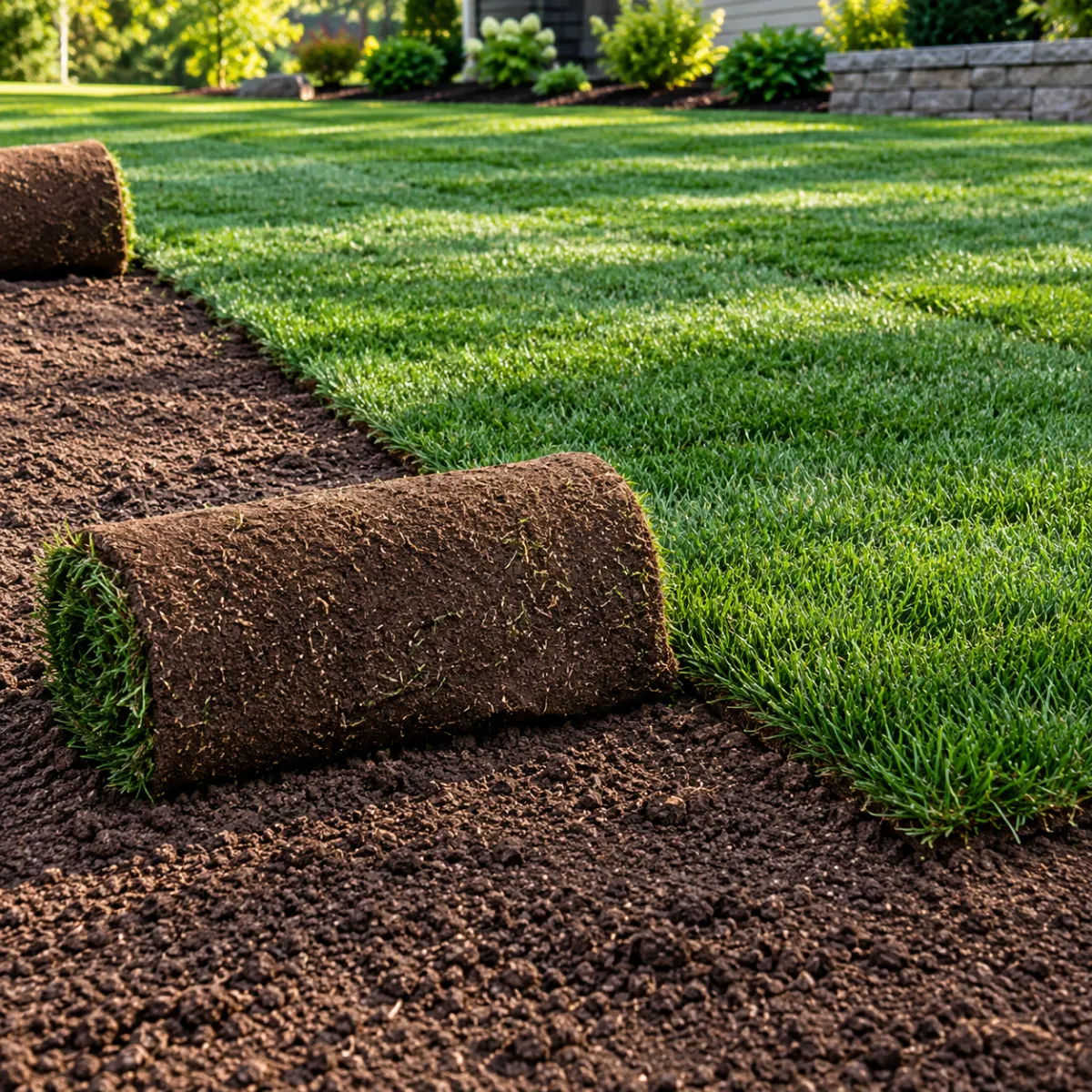
Sod installation & grass seeding
Laying pre-grown grass (sod) or planting grass seed.
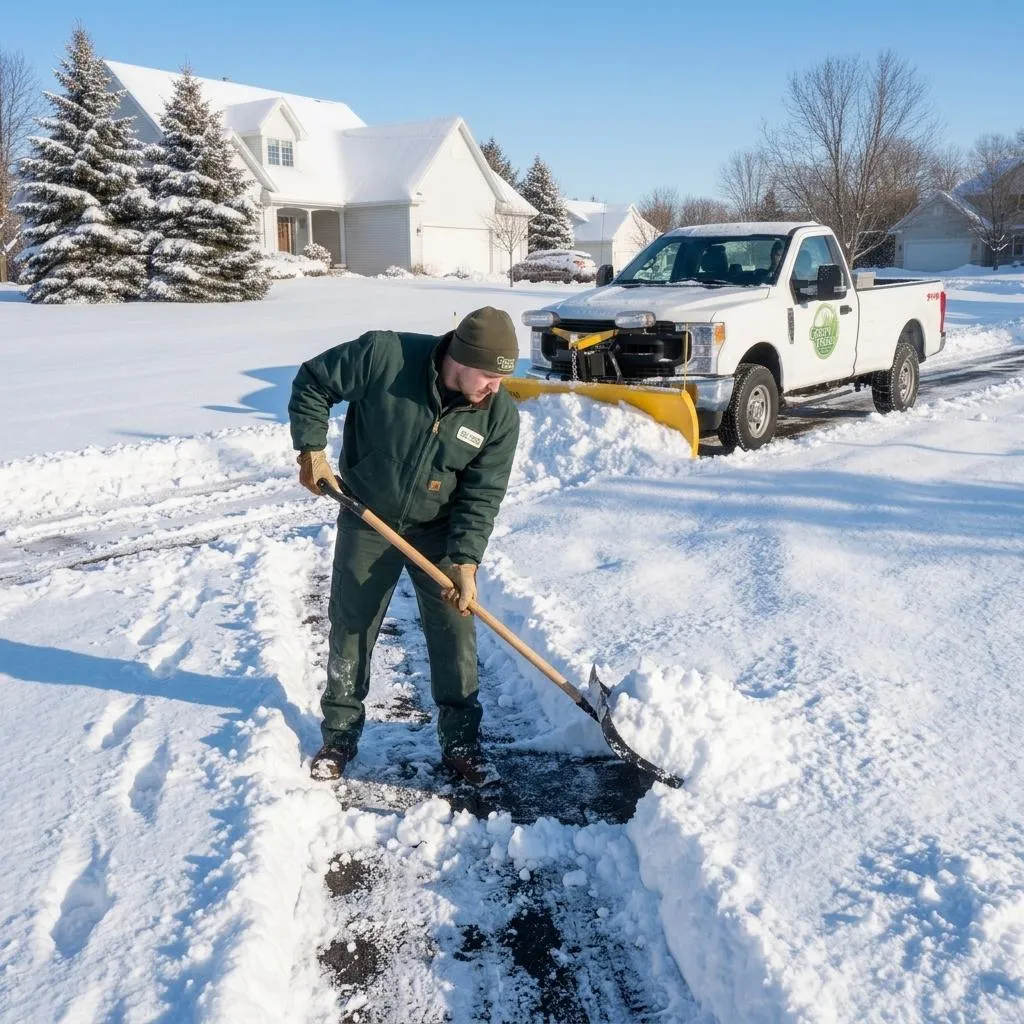
Snow Removal
Clearing snow and ice from driveways, sidewalks, and lots.
The Wet Spot That Has a Source
Somebody has an area of yard that stays soft. They regrade it. They add topsoil. They put in a drain. A season later it is soft again, in the same place.
In DeForest the reason is often that the water is not arriving from the surface at all. Spring-fed ground is being supplied from below, continuously, and a surface fix aimed at rainfall does not touch it. The tell is timing: a rainfall problem dries out during a dry stretch, and a spring does not. If a spot is still soft after three dry weeks in August, the source is underneath.
The second version is old agricultural drainage. A lot of this ground was farmed and tiled generations ago. Those tile lines are still down there, some still working and some collapsed, and a subdivision built over them inherits whatever they are doing now.
How we build: Spring-fed ground gets intercepted and routed rather than filled or regraded: find where the water is entering, collect it below the surface, and carry it to a real outlet, with plants that tolerate wet feet in whatever stays damp. That routing also has to satisfy the thermally sensitive watershed rules, which is a design consideration here rather than an afterthought, and one worth confirming before work starts rather than after.
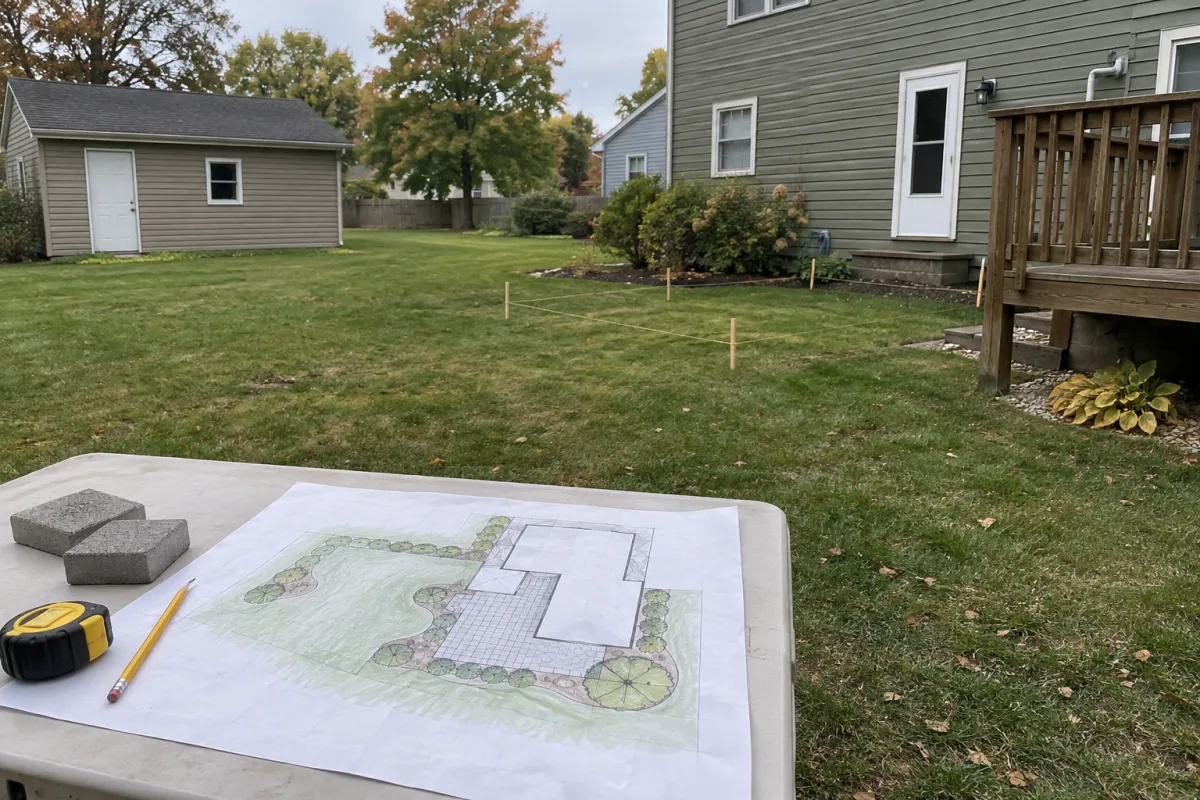
The Wet Spot That Has a Source
Somebody has an area of yard that stays soft. They regrade it. They add topsoil. They put in a drain. A season later it is soft again, in the same place.
In DeForest the reason is often that the water is not arriving from the surface at all. Spring-fed ground is being supplied from below, continuously, and a surface fix aimed at rainfall does not touch it. The tell is timing: a rainfall problem dries out during a dry stretch, and a spring does not. If a spot is still soft after three dry weeks in August, the source is underneath.
The second version is old agricultural drainage. A lot of this ground was farmed and tiled generations ago. Those tile lines are still down there, some still working and some collapsed, and a subdivision built over them inherits whatever they are doing now.
How we build: Spring-fed ground gets intercepted and routed rather than filled or regraded: find where the water is entering, collect it below the surface, and carry it to a real outlet, with plants that tolerate wet feet in whatever stays damp. That routing also has to satisfy the thermally sensitive watershed rules, which is a design consideration here rather than an afterthought, and one worth confirming before work starts rather than after.
The Wet Spot That Has a Source
Somebody has an area of yard that stays soft. They regrade it. They add topsoil. They put in a drain. A season later it is soft again, in the same place.
In DeForest the reason is often that the water is not arriving from the surface at all. Spring-fed ground is being supplied from below, continuously, and a surface fix aimed at rainfall does not touch it. The tell is timing: a rainfall problem dries out during a dry stretch, and a spring does not. If a spot is still soft after three dry weeks in August, the source is underneath.
The second version is old agricultural drainage. A lot of this ground was farmed and tiled generations ago. Those tile lines are still down there, some still working and some collapsed, and a subdivision built over them inherits whatever they are doing now.
How we build: Spring-fed ground gets intercepted and routed rather than filled or regraded: find where the water is entering, collect it below the surface, and carry it to a real outlet, with plants that tolerate wet feet in whatever stays damp. That routing also has to satisfy the thermally sensitive watershed rules, which is a design consideration here rather than an afterthought, and one worth confirming before work starts rather than after.
We Will Work Out Where It Is Coming From
Surface water, groundwater, a spring, and an old field tile all look the same from above and need different answers. Matt will walk it before quoting anything. Call Madison Green Team at (608) 573-8889 or request a free quote online.
HOW WE BRING YOUR OUTDOOR
VISION TO LIFE
Get in Touch
Call 608-573-8889 or use our contact form to tell us about your project.
Plan & Design
We assess your property, discuss your needs, and provide a detailed design or service plan.
Build & Maintain
Our team completes installation or maintenance, keeping your landscape beautiful and functional.
Our Dane County Landscaping Service Areas
Based in Verona, we serve Madison, Middleton, Sun Prairie, Fitchburg, Waunakee, Mount Horeb, Cross Plains, and more.
Not sure if we cover your area?
Give us a call - we likely do.
Contact Us
Monday-Saturday: 7:00AM - 6:00PM
Closed Sunday


